
Should you choose open or closed rhinoplasty? Learn the real differences, recovery, safety, costs, and how surgeons decide which approach fits your nose.

Should you choose open or closed rhinoplasty? Learn the real differences, recovery, safety, costs, and how surgeons decide which approach fits your nose.

Yes, septoplasty and rhinoplasty can often be done together. Learn who may be suitable, recovery, safety, travel timing, and what affects cost.

Tip numbness at month 1 is normal — when feeling returns (area by area), what slows it down, and the one symptom that isn’t normal.

Am I a candidate for tipplasty if I only want to change my nasal tip? Learn who qualifies, limits, recovery, risks, and what affects the final plan.

Revision noses swell longer — often 12–18 months to the final result. The month-by-month timeline, what’s normal, and the signs worth a call.
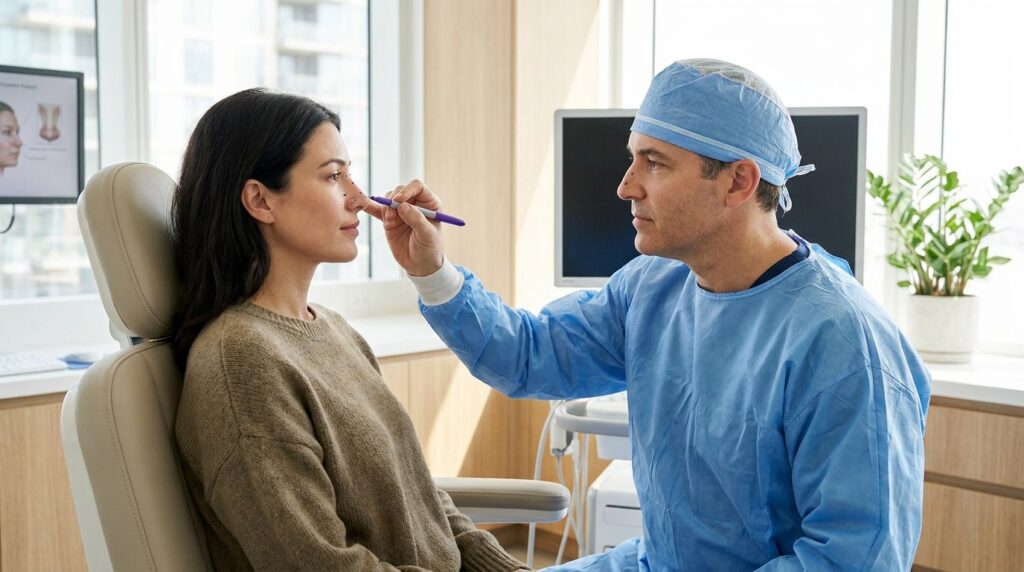
Learn what to avoid before rhinoplasty to support smoother recovery, lower risk, and better planning, from smoking and supplements to travel timing.

Most people can walk within days after rhinoplasty, resume light exercise after a few weeks, and return to hard training later with surgeon approval.

Resting glasses on a healing nose too early can dent the bridge. The 4–6 week rule, taping tricks, and contact-free options that work.

Learn what to expect during tipplasty recovery in the first week, from swelling and breathing changes to cleaning, sleep, travel, and warning signs.

Most surgeons want you elevated for 10–14 nights. The exact angle, when you can side-sleep again, and the pillow setup that makes it easy.

Tipplasty swelling often improves in weeks, but the nasal tip can stay puffy for months. Learn the real recovery timeline and warning signs.

Nasal scabs and dryness after turbinate reduction often improve over 2 to 6 weeks, but healing varies by technique and aftercare.