

Have a question about Almond Eye / Cat Eye / Fox Eye?
In this article
- Why are “almond eye surgery” and “fox eye surgery” confusing terms?
- What is the difference between almond eye surgery and fox eye surgery in practice?
- Which procedure is actually used to create these looks?
- Who is a good candidate, and who should be careful?
- What are the risks, including dry eye and eyelid malposition?
- What does recovery usually look like?
- How do cost, travel, and clinic choice work for patients coming to Turkey?
Patients often ask what is the difference between almond eye surgery and fox eye surgery because the names sound similar, but they do not always mean the same thing in clinic. The confusion matters: these are mostly marketing terms, not strict medical procedure names, and the plan behind each one can vary a lot from one surgeon to another.
Why are “almond eye surgery” and “fox eye surgery” confusing terms?
The first thing to understand is that almond eye surgery and fox eye surgery are not standard medical procedure names in the way blepharoplasty means eyelid surgery. They are umbrella labels used in advertising and patient conversations. In practice, a surgeon may be talking about a lateral canthoplasty or canthopexy, an upper blepharoplasty, a brow lift, temple support, or a combination approach around the outer corner of the eye.
That is why two clinics can use the same phrase and mean two different operations. One may mean reshaping or supporting the outer corner of the eyelid. Another may mean lifting the tail of the brow to create a more elongated, upward-slanting look. A third may include both. If you are comparing treatment plans, ask for the exact surgical steps rather than relying on the trend name alone.
This matters for safety as much as aesthetics. The outer eyelid is not just skin. It is part of a delicate support system that affects eye closure, tear function, and lower lid position. The NHS notes that cosmetic eyelid surgery can carry complications such as infection, asymmetry, and problems closing the eyes. In published oculoplastic and facial plastic surgery literature, procedures involving the lateral canthus are discussed in terms of eyelid support, lid position, and function rather than trend labels.
A good consultation should translate the social-media wording into clear anatomy. You should come away knowing whether the plan is mostly about the eyelid corner, the brow tail, the upper lid skin fold, or all three together.
📋 Important terminology point “Almond eye” and “fox eye” are common marketing terms rather than formally standardised procedure names. Always ask what operation is actually being proposed.
What is the difference between almond eye surgery and fox eye surgery in practice?
In most real-world consultations, almond eye surgery usually refers to creating a more tapered, elongated eye shape with cleaner outer-corner definition. The aim is often balance and contour rather than a dramatic lift. The result patients describe is a smoother, more refined eye shape that looks naturally longer from inner to outer corner.
Fox eye surgery, by contrast, is more often used to describe a stronger upward pull at the outer eye and brow tail. In other words, it usually leans more toward a lifted, slanted, more stylised look. Some surgeons achieve that mainly with a brow or temple lift, while others add canthopexy or canthoplasty to support or reposition the outer lid corner.
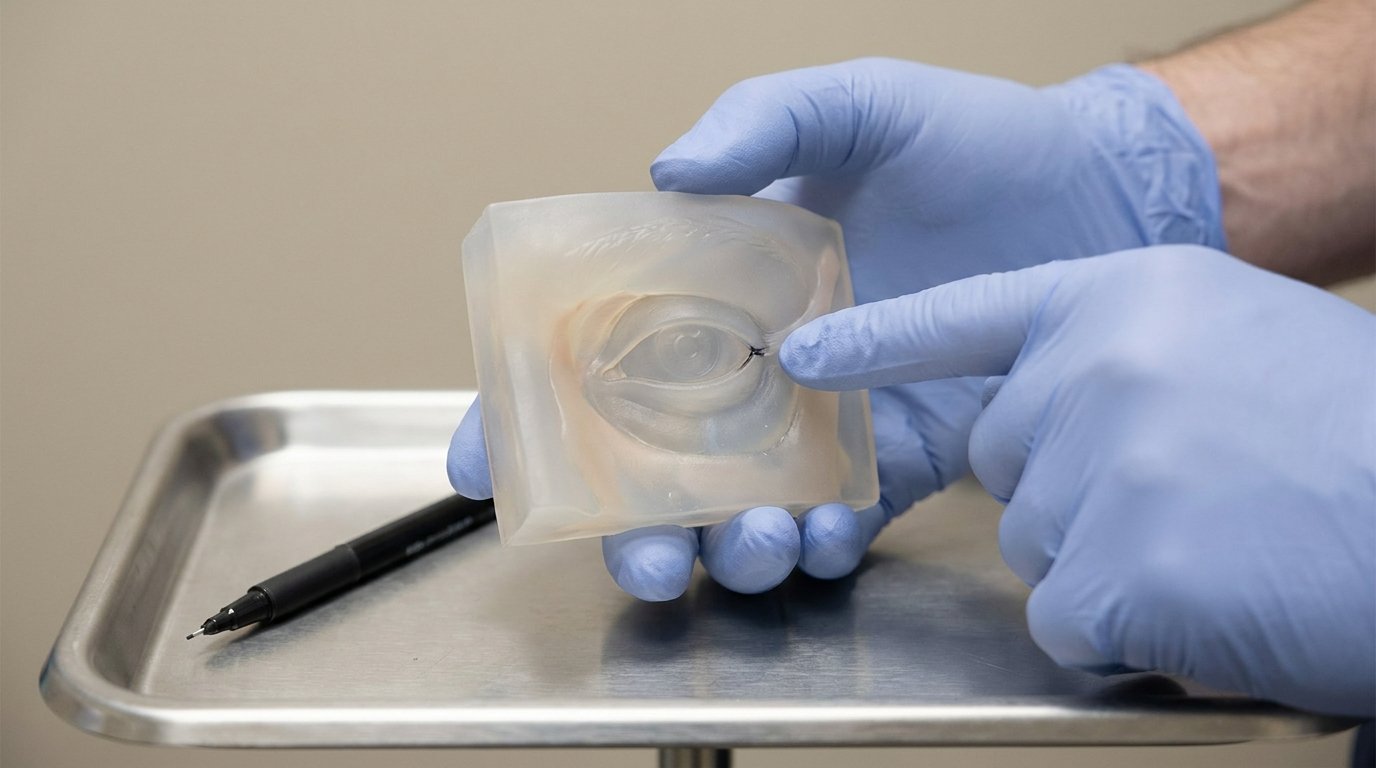
So the difference is often less about one named operation versus another, and more about the visual goal and the mix of techniques used to get there. Almond eye styling tends to aim for elongation and subtle definition. Fox eye styling tends to aim for upward tilt and a sharper outer sweep. There is overlap, and many patients asking for one are actually better suited to a softer version of the other.
From a technical point of view, the procedures a surgeon may discuss include the following:
- ✓Canthopexy, which tightens and supports the outer corner tendon area without fully cutting and resetting it in the way a more formal repositioning procedure might.
- ✓Canthoplasty, which is a more structural reshaping or repositioning of the lateral canthus, the outer eye corner.
- ✓Upper blepharoplasty, when excess upper eyelid skin is part of the heaviness changing eye shape.
- ✓Brow lift or temple lift, when the outer brow is low and contributes more to the look than the eyelid itself.
Published surgical literature and standard oculoplastic teaching generally use canthopexy and canthoplasty for indications such as lower lid laxity, support, and shape control, not trend branding. That is one reason a careful surgeon may spend more time talking about lid support and anatomy than about whether your request is “almond” or “fox.”
Which procedure is actually used to create these looks?
There is no single operation that automatically creates either look. The best plan depends on what is causing the current appearance. A low outer brow, upper lid fullness, lower lid laxity, weak outer-corner support, and naturally round eyes all need different solutions.
If the issue is mainly a drooping outer brow, a surgeon may focus on a brow lift rather than the eyelid itself. If the issue is poor support at the outer lid corner, canthopexy or canthoplasty may be more relevant. If the eyes look short or heavy because of excess upper lid skin, upper eyelid surgery may matter more than any lift. Patients often assume the eye corner is the whole story, but that is not always true.
The American Society of Plastic Surgeons lists eyelid surgery and brow lift as distinct procedures because they treat different structures. That distinction is useful here. A lifted brow can create a fox-eye effect without much change to the actual eyelid margin, while a canthal procedure can change the eye opening more directly. In some cases, combining both is what creates the look a patient has in mind.
If you are exploring options, it helps to understand where these procedures sit within facial surgery more broadly. A page on eyelid surgery is often the right place to start, and in some consultations a brow lift turns out to be more relevant than patients expected.
A responsible surgeon should also explain what cannot be changed safely. Eye shape is limited by bone structure, skin quality, brow position, and how well the lids already close. Pushing for a very exaggerated lift can raise the risk of visible asymmetry, tightness, or lid malposition.
The surgeon explains the anatomy causing your current eye shape and names the actual procedure steps rather than only using trend labels.
A clinic promises a fashionable eye shape without discussing lid support, eye closure, tear symptoms, or how your brow position affects the result.
Who is a good candidate, and who should be careful?
Good candidates are usually people who want a modest change, have realistic expectations, and have healthy eyelid function before surgery. The best results tend to come when the requested look fits the person’s natural anatomy rather than fighting against it.
Caution is especially important if you already have dry eye symptoms, difficulty closing the eyes fully, previous eyelid surgery, visible lower lid laxity, thyroid eye disease, facial nerve weakness, or significant asymmetry. The Mayo Clinic and NHS both describe eye and eyelid procedures as requiring careful assessment of eye health and healing risk. In published facial plastic and oculoplastic literature, pre-existing dryness and poor lid support are important because surgery at the outer corner can worsen exposure symptoms in some patients.
This is one area where trend-driven requests can run ahead of anatomy. A person may be able to achieve a mild lifted look safely, but not the sharper effect they saw online. The trade-off is simple: the stronger the pull and the tighter the corner, the more carefully the surgeon has to protect normal lid function.
You should also ask whether your desired change might be better achieved by a different procedure entirely. Some patients asking for “fox eyes” are really bothered by hooding, outer-brow descent, or tired-looking upper lids. Others do better with non-surgical options, or with no surgery at all.
Questions worth asking in consultation
A thorough consultation should cover the practical points patients often forget to raise:
- ✓Will the plan change the brow, the lid corner, or both?
- ✓Do I have any signs of dry eye or lower-lid laxity now?
- ✓How likely is visible asymmetry in my case?
- ✓What happens if I do not like the degree of lift after healing?
- ✓How often do patients need revision after this type of surgery?
What are the risks, including dry eye and eyelid malposition?
This is the section many patients skip too quickly. Surgery around the outer eye corner can look small on the surface, but the risks are real and should be discussed in plain language.
Recognised risks of eyelid-area surgery include swelling, bruising, discomfort, infection, bleeding, asymmetry, visible scarring, and delayed healing. The NHS also notes that problems can include difficulty closing the eyes and irritation. When the outer corner is tightened or repositioned, surgeons must also think about lid malposition. That can include ectropion, where the lower eyelid turns outward, or a rounded, pulled, or uneven shape that looks unnatural.
Another concern is lagophthalmos, which means incomplete eye closure. Even a mild version can make the eye feel dry, gritty, or overly watery because the tear film is not spreading well. Dry eye symptoms are especially relevant after surgery that changes lid tension or how the lids meet. In the medical literature indexed on PubMed, studies on canthoplasty, canthopexy, and lower eyelid surgery repeatedly discuss eyelid support, ocular surface symptoms, and the importance of patient selection.
Revision is sometimes needed, especially when a patient wants a sharper lift than their anatomy comfortably allows. Revision does not always mean a serious complication, but it does mean more healing time, more unpredictability, and often more cost. That is why the safest plan is not always the most dramatic-looking one.
A careful surgeon should examine blink quality, lid snap-back, eye surface symptoms, brow position, and pre-existing asymmetry before planning surgery. If those checks are skipped, that is a concern.
⚠️ Risk detail that should be discussed clearly Ask specifically about ectropion, lid malposition, lagophthalmos, dry eye, infection, asymmetry, scarring, and the possible need for revision.
What does recovery usually look like?
Recovery depends on what was actually done. A brow-focused approach heals differently from a canthoplasty, and a combined plan usually takes longer than a single small adjustment. That said, most patients should expect the first part of recovery to involve swelling, tightness, and bruising around the outer eyes.
In the early days, the area can look more lifted, more uneven, or more dramatic than the final result. That does not automatically mean something is wrong. Early overcorrection, asymmetrical swelling, and temporary stiffness can all happen while tissues settle. Published papers in journals such as Aesthetic Surgery Journal and Facial Plastic Surgery & Aesthetic Medicine commonly discuss staged healing rather than instant final results.
A practical way to think about recovery is in phases:
- ✓Early recovery: swelling, bruising, and tightness are most noticeable; social downtime is usually needed.
- ✓Short-term recovery: most people look more presentable, but the outer corners may still feel firm and look slightly uneven.
- ✓Intermediate healing: the lift softens, scars mature, and the shape becomes easier to judge.
- ✓Final settling: subtle asymmetries and scar texture continue improving over time.
During recovery, you should watch for warning signs such as worsening pain, increasing redness, discharge, fever, sudden change in vision, or a lid that no longer sits properly against the eye. Those need prompt medical review.
For international patients, it is sensible not to plan a rushed return home. Even if the operation is short, the eye area is delicate and follow-up matters. Many people benefit from staying long enough for the first post-op checks, suture care if used, and an early assessment of lid position.
How do cost, travel, and clinic choice work for patients coming to Turkey?
For medical travellers, the quote is only one part of the decision. With eye-area surgery, what matters just as much is who is doing the operation, where follow-up happens, and whether the plan is anatomically sound rather than trend-led.
Cost is best understood in terms of what drives the price. A simple plan is different from a combined surgery involving brow work, eyelid surgery, or formal canthoplasty. The surgeon’s experience, hospital standards, anaesthesia, aftercare, and whether accommodation or transfers are included can all affect the final quote. A personalised price is usually confirmed after photographs, medical history review, and consultation.
When comparing clinics, ask exactly what is included. A proper quote often sets out the procedure itself, surgeon and anaesthesia fees, hospital or theatre use, routine medication, follow-up visits, and any support for international patients. It should also be clear what is not included, especially if revision or an extended stay became necessary.
For clinic choice, surgeon training and accreditation matter more than branding. Look for a surgeon with relevant eyelid or facial surgery experience, clear complication counselling, and a willingness to say no to unrealistic requests. Bodies such as EBOPRAS are relevant because they relate to standards in plastic surgery training and examination in Europe, while BAAPS and ASPS provide patient-facing information on cosmetic surgery safety and procedure planning.
If you are comparing providers, review the surgeon profile, not just before-and-after photos. It can help to start with a clinic’s doctor information page and request a personalised assessment through the consultation page. For international patients, ask how many in-person checks are planned before you fly home and what support is available if you have concerns after returning.
A modest brow adjustment, upper eyelid surgery, or no surgery may suit the anatomy better than trying to force a dramatic fox-eye look.
- ✓Ask for the exact procedure name, not only “almond eye” or “fox eye.”
- ✓Confirm where the operation takes place and who provides anaesthesia.
- ✓Check how long you are advised to stay locally for early follow-up.
- ✓Ask what happens if healing is slower than expected or revision is discussed.
Frequently Asked Questions
References
- 📎NHS: Cosmetic procedures
- 📎ASPS: Cosmetic procedures
- 📎EBOPRAS
- 📎PubMed search: canthoplasty canthopexy dry eye ectropion eyelid malposition recovery
Related Articles

You Might Also Like


Related articles

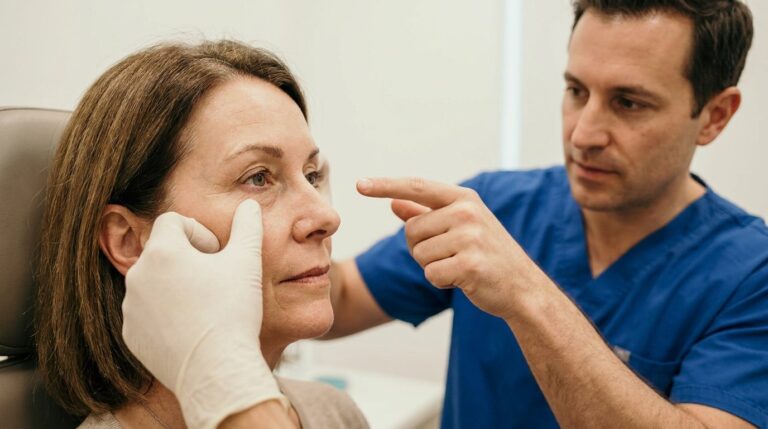
Our specialists
 Clineca SpecialistErkan PinegözPlastic & Reconstructive Surgery
 Clineca SpecialistHakan AktaşPlastic & Reconstructive Surgery
 Clineca SpecialistOrkun UzuneyüpoğluPlastic & Reconstructive Surgery
 Clineca SpecialistSalim İskenderPlastic & Reconstructive Surgery
 Clineca SpecialistEngin SelamioğluPlastic & Reconstructive Surgery
 Clineca SpecialistCem AydınPlastic & Reconstructive Surgery
 Clineca SpecialistAlperen ÖnalEar, Nose & Throat (ENT)