
Have a question about Tipplasty?
In this article
- Where is a tipplasty scar, and will people actually see it?
- What does the scar look like as it heals week by week and month by month?
- What makes a tipplasty scar look better or worse?
- When is scar healing normal, and when should you contact the surgeon?
- How should you care for a tipplasty scar if you are healing in Turkey and then going home?
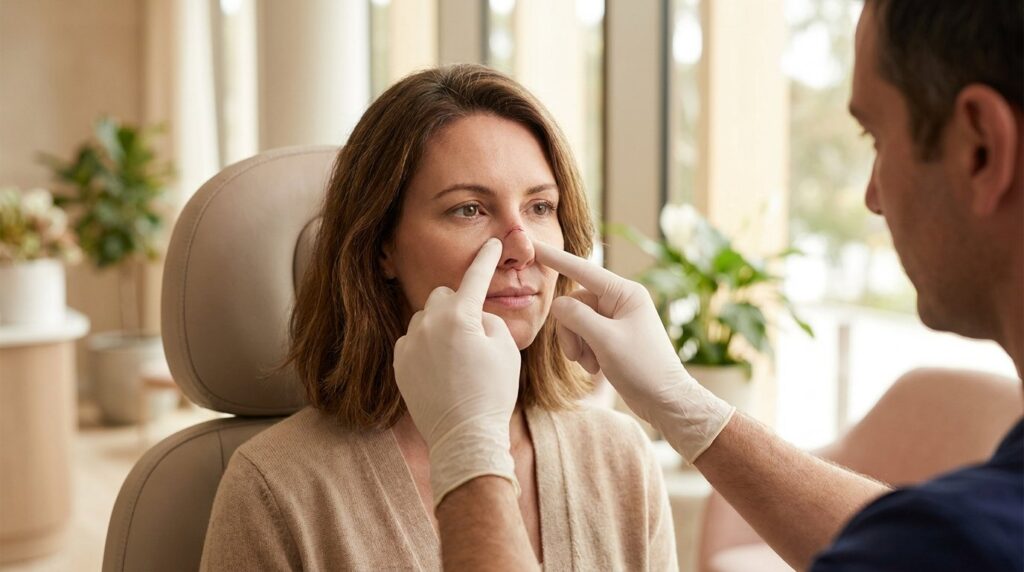
If you are searching for tipplasty scars what they look like and how they heal, the first thing to know is that the answer depends a lot on how the tip is approached. Many tipplasty procedures leave no visible outer scar at all, while others leave a small scar on the columella, the strip of skin between the nostrils, which is usually the least noticeable place on the nose once healed.
In most patients, that scar looks like a fine pink line early on, then slowly softens and fades over the following months as the scar matures. The details matter, though: skin type, swelling, stitch reaction, tension on the wound, and whether you heal smoothly in the first few weeks can all change how obvious it looks.
Where is a tipplasty scar, and will people actually see it?
A tipplasty only changes the lower part of the nose, but the scar depends on whether the surgeon uses a closed approach or an open approach. In a closed tipplasty, cuts are placed inside the nostrils, so there is usually no visible external scar. In an open tipplasty, there is a short incision across the columella, the small bridge of skin between the nostrils, and that is the scar patients usually mean when they ask about visibility.
For most people, the columellar scar is hard to notice in normal conversation because it sits under the tip and is not front-facing. It is often more visible to you in the mirror, especially when swelling is still making the area look firm or shiny, than it is to other people. This is one reason why scar anxiety is common in the first few weeks and often settles later.
If you are still deciding between a tip-only procedure and a wider nasal operation, it helps to understand how the approach differs in practice. Our article on the difference between tipplasty and full rhinoplasty explains when a limited tip procedure is enough and when it is not.
Scar visibility also changes with lighting, makeup, and skin tone. On lighter skin, fresh scars often look pink or red at first. On darker skin, they may look brown, grey, or slightly darker than the surrounding skin during healing before they settle. That does not always mean something is wrong; it often reflects normal pigment change during scar maturation.
When an external scar is needed, the columella is commonly chosen because it is tucked under the nasal tip and tends to heal discreetly in many patients.
Early swelling, close-up phone photos, and bright bathroom lighting often make a fresh scar look more obvious than it appears to others in daily life.
What does the scar look like as it heals week by week and month by month?
In the first days, the scar usually looks like a very thin line with dried blood, tiny crusting, or stitch marks. The area can look a little uneven because the tip is swollen and the skin is tight. That early appearance is rarely the final result.
By the end of the first one to two weeks, the surface is usually closed if healing is straightforward. The line may still look pink, slightly raised, or firmer than the surrounding skin. This is the stage when patients often worry that the scar looks too visible, but scars commonly become more noticeable before they improve.
Over the next several weeks, redness usually starts to calm and the line begins to flatten. Scar remodelling then continues for months. The NHS notes that scar healing after surgery takes time, and plastic surgery literature consistently shows that scars mature gradually rather than disappearing quickly. Studies discussed in journals such as Aesthetic Plastic Surgery and Plastic and Reconstructive Surgery describe scar maturation as a long process shaped by inflammation, collagen remodelling, and individual healing patterns.
If you are in the early recovery phase, our guides on tipplasty recovery in the first week and tipplasty recovery in the first 2 weeks can help you separate normal healing from normal-looking panic.
The timeline below is a realistic guide rather than a promise. Some scars settle faster, while others stay pink for longer, especially in reactive skin or after prolonged swelling.
What makes a tipplasty scar look better or worse?
Several things affect scar appearance, and not all of them are under your control. Your natural skin behaviour matters a lot. Some people form barely visible fine-line scars. Others are more prone to thicker, darker, or raised scars, especially if they have a personal or family history of hypertrophic scars or keloids.
Skin tone also plays a part. Post-inflammatory pigment change can make a healing scar look darker or redder for longer, even when the incision itself is healing properly. That is one reason surgeons should ask about previous scar history before surgery, not only about the nose.
Tension on the wound edges matters too. If the skin is under more pull, or if there is significant swelling, the scar may stay more visible for longer. Stitch reaction can also temporarily make the incision look bumpy. In most cases that settles, but it can be upsetting if you are not expecting it.
The factor surgeons worry about most in the early period is wound healing quality. Small gaps, repeated irritation, aggressive cleaning, smoking, and infection can all worsen scarring. According to the Mayo Clinic and NHS guidance on post-operative wound care, increasing redness, spreading warmth, pus, bad smell, or fever deserve prompt medical review because infection can affect both safety and scar quality.
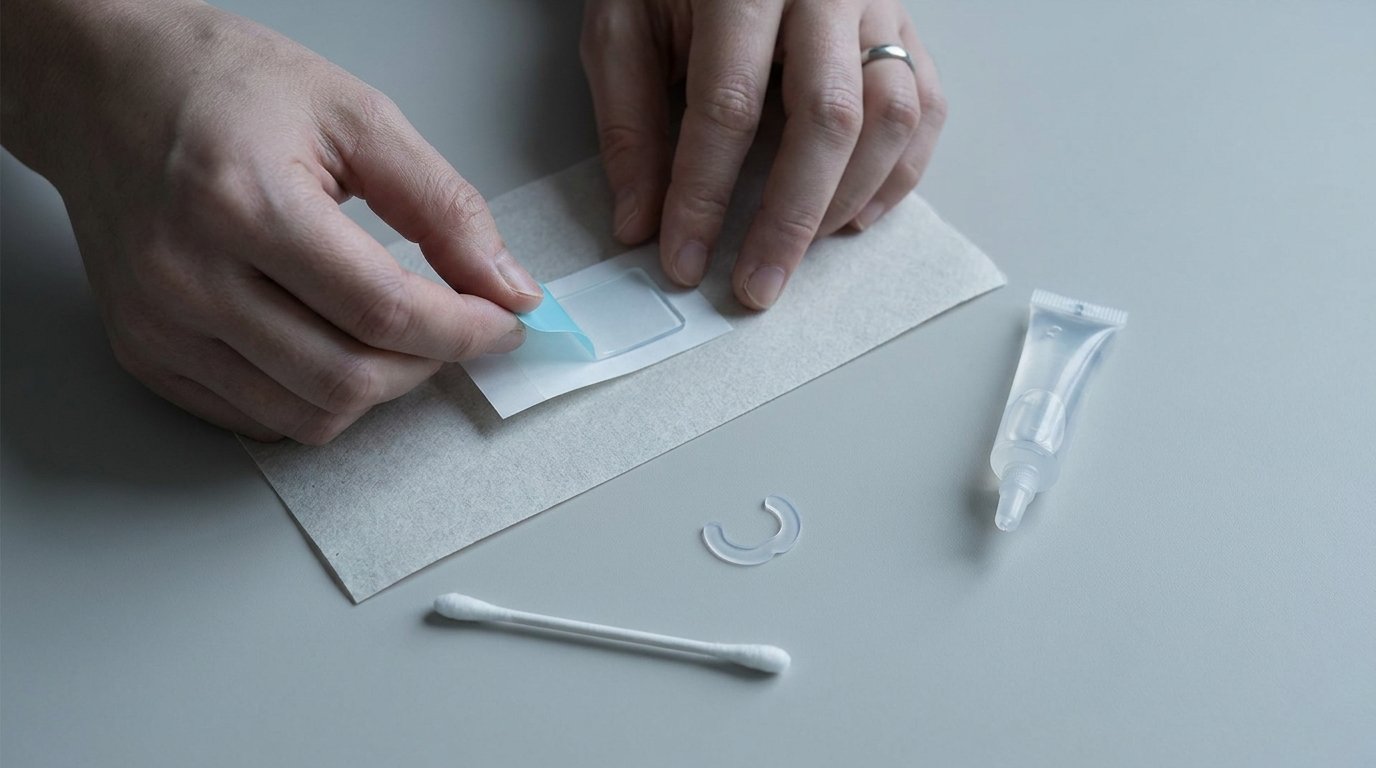
Silicone-based scar therapy is often used once the skin is fully closed and your surgeon says it is safe to start. Evidence reviewed in plastic surgery journals and dermatology literature supports silicone gel or silicone sheeting as one of the better-studied non-invasive options for helping scars flatten and soften over time. It is not magic, but it is one of the few scar-care methods with a decent evidence base.
Sun exposure is another quiet but important factor. Fresh scars can darken more easily, so if you are outdoors, especially while travelling, careful sun protection matters even for a small scar in a shaded area of the nose.
📋 Silicone only after closure Do not put silicone gel, scar tape, or active skincare on a fresh incision until the wound is fully closed and your surgeon has cleared it.
- ✓Skin type and natural tendency to form thick or pigmented scars
- ✓Whether the procedure was closed or open
- ✓How much swelling and tension the incision had early on
- ✓Smoking or nicotine exposure during healing
- ✓Infection, wound separation, or repeated irritation
- ✓Consistent use of surgeon-approved scar care after the wound has closed
When is scar healing normal, and when should you contact the surgeon?
A scar can look imperfect and still be healing normally. Mild redness, a firm line, a slight ridge, intermittent itching, and small stitch marks are all common in the early phase. Routine follow-up is usually enough if the wound stays closed and the appearance is gradually improving over time.
You should contact the surgical team sooner if the scar becomes more red rather than less red, if swelling suddenly increases after initially settling, or if the area starts to ooze yellow or green fluid. Spreading warmth, increasing pain, fever, a bad smell, or a wound edge that opens are more urgent warning signs. These are not just cosmetic issues; they can signal infection or wound breakdown.
This matters even more for health-tourism patients who may be flying home soon after surgery. Before you travel, make sure you know exactly who to message, what photos they want if you have a concern, whether they provide out-of-hours support, and what local doctor or hospital you should use if something urgent happens after hours. Fast communication and clear instructions matter just as much as the scar cream.
If you are planning a procedure abroad, ask how many days you are expected to stay for checks before flying home, what is included in the quote, and whether transfers and hotel arrangements are handled for you. Our article on what an all-inclusive surgery package in Turkey may include can help you ask more practical questions before you book.
Later on, if a scar remains thick, raised, or very red for longer than expected, treatment may be worth discussing rather than just waiting indefinitely. Options can include silicone therapy, massage if approved, steroid injection for a hypertrophic scar, or scar revision in selected cases. The right timing matters: many surgeons prefer to let a scar mature first unless there is an earlier problem that clearly needs treatment.
⚠️ Seek urgent medical advice Contact the surgical team promptly, or use local urgent care, if you have spreading redness, pus, fever, increasing pain, a bad smell, or the wound opens.
How should you care for a tipplasty scar if you are healing in Turkey and then going home?
In the first phase, scar care is really wound care. Keep the area as clean and dry as your surgeon advises, avoid picking crusts, and do not start oils, acids, or over-the-counter scar products too early. A lot of scar problems start with over-treatment, not under-treatment.
Once the incision is closed, the care plan often becomes simpler but longer. That may include gentle cleansing, silicone gel or silicone strips if advised, and sun protection. If the surgeon recommends scar massage, wait until they tell you the timing and technique, because pressing too early on a healing nasal tip is not helpful.
For patients travelling, written aftercare instructions are worth asking for before discharge. You want clear steps on cleaning, when to restart normal washing, when to begin scar treatment if recommended, what kind of swelling is expected, and who to contact if you are unsure. Good organisation is not a luxury here; it often shapes how confident patients feel once they are back home.
When you compare clinics, look for a surgeon with recognised specialist training in plastic or facial surgery, transparent follow-up arrangements, and a facility that can clearly explain accreditation and emergency protocols. In Europe, EBOPRAS is one recognised board in plastic surgery, and BAAPS also stresses the importance of qualified surgeons and informed consent. Those details do not guarantee a perfect scar, but they reduce the chance of avoidable problems.
They explain the surgical approach, likely scar location, recovery check schedule, and how aftercare works once you are home.
They dismiss scar questions, avoid showing how follow-up works, or promise that the scar will be completely invisible.
Frequently Asked Questions
References
- 📎NHS: Cosmetic procedures
- 📎Mayo Clinic: Tests and procedures
- 📎PubMed search: silicone gel scar prevention surgery
- 📎PubMed search: columellar scar open rhinoplasty scar healing
Related Articles


You Might Also Like



Related articles


Our specialists
 Clineca SpecialistErkan PinegözPlastic & Reconstructive Surgery
 Clineca SpecialistHakan AktaşPlastic & Reconstructive Surgery
 Clineca SpecialistOrkun UzuneyüpoğluPlastic & Reconstructive Surgery
 Clineca SpecialistSalim İskenderPlastic & Reconstructive Surgery
 Clineca SpecialistEngin SelamioğluPlastic & Reconstructive Surgery
 Clineca SpecialistCem AydınPlastic & Reconstructive Surgery
 Clineca SpecialistAlperen ÖnalEar, Nose & Throat (ENT)