

Have a question about Almond Eye / Cat Eye / Fox Eye?
In this article
- A short recovery snapshot before the detail
- How does recovery usually unfold in the first two weeks?
- What symptoms are normal, and what should make me call the clinic?
- When can I go out, work, exercise and fly home?
- What affects how long recovery takes?
- How should I think about cost and travel planning without focusing only on the quote?
If you are asking what should I expect during recovery after almond eye surgery, the real answer depends on the exact technique used around the outer eye corner and whether it was combined with other eyelid work. The recovery is usually manageable, but the eye area is delicate, visible and quick to show swelling, so small day-by-day changes can feel bigger than they are.
A short recovery snapshot before the detail
Most people have the most obvious swelling and bruising in the first week, then look steadily more presentable over the second week. Travel plans usually need to leave room for at least the early checks and the point when swelling is clearly settling, because this surgery is done around the eyelid and outer corner, where tension, dryness and asymmetry can change quickly in the first days.
A simple but important point: “almond eye”, “cat eye” and “fox eye” are not one single operation. Some patients have canthopexy (tightening and supporting the outer eyelid corner), some have canthoplasty (reshaping or repositioning that outer corner more structurally), and some combine this with temporal lift or eyelid surgery. Recovery is usually longer and less predictable when the surgery is more structural or combined.
📋 Typical downtime The first week is usually the peak swelling period. Many patients feel socially better in the second week, but the eye shape can still look tight, uneven or overcorrected before tissues relax.
⚠️ Travel timing matters Do not plan to fly out too quickly just because the procedure is small. You need enough time for early follow-up, incision checks and a clear plan if the eye becomes too dry, too painful or unusually swollen.
🚨 Urgent red flags Seek prompt medical review for worsening rather than improving pain, sudden vision change, marked one-sided swelling, increasing redness, pus-like discharge, fever, or trouble closing the eye properly.
How does recovery usually unfold in the first two weeks?
The first 48 hours are usually the most dramatic-looking part, not necessarily the most medically worrying part. Expect swelling at the outer corners, a tight or pulling feeling, watery eyes, mild blurred vision from ointment, and bruising that may sit at the side of the eye or drift downwards. Cold compresses, head elevation and sticking closely to the aftercare plan matter more here than trying to judge the final shape.
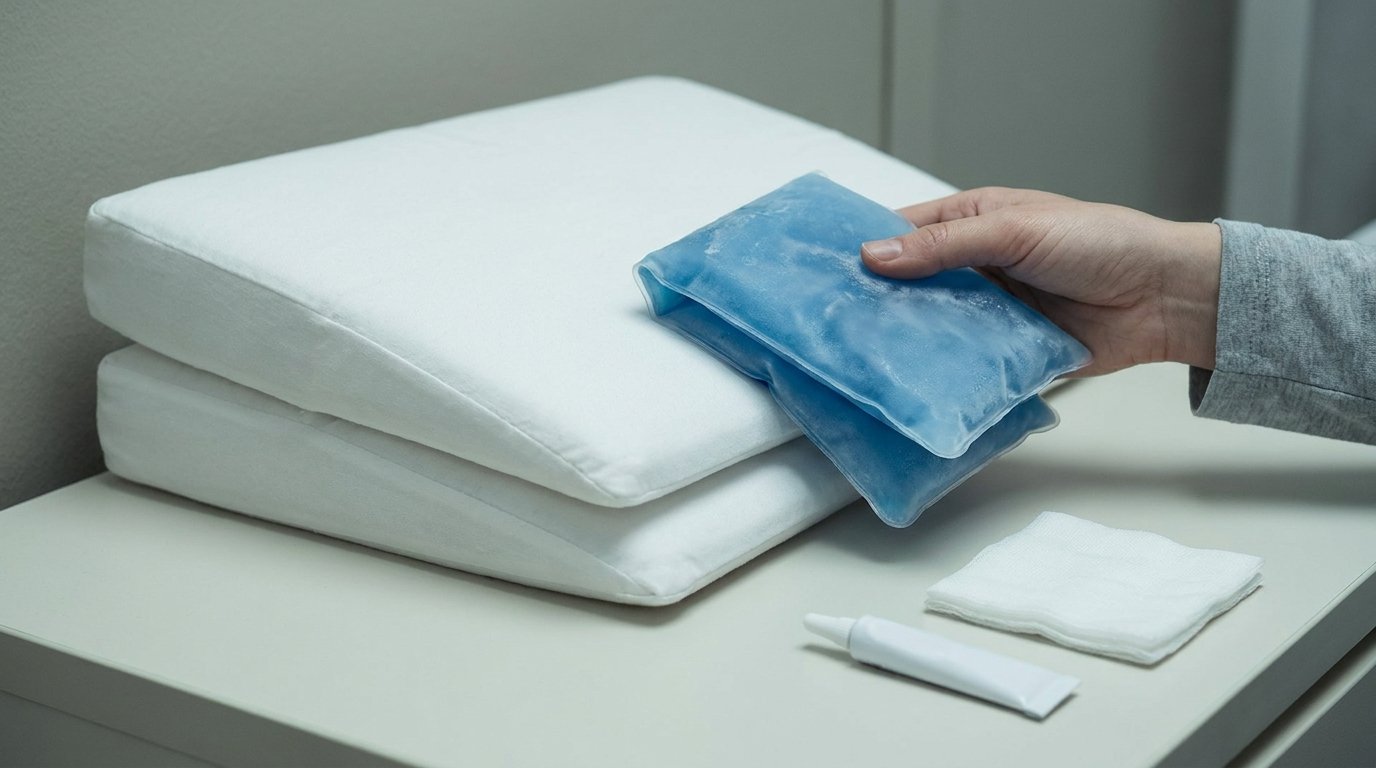
By days 3 to 7, bruising often becomes more obvious before it gets better. The outer corner can look higher, sharper or tighter than you expected. That alone does not mean the result is wrong. Tissues around the eyelid are thin, so even mild swelling can make the eye shape look temporarily exaggerated.
During the second week, many patients notice that the area looks less “surgical” but still not natural yet. Tightness usually eases, makeup may still be restricted near the incision line, and the two sides may not settle at the same speed. If your surgery was paired with a temporal lift, swelling can extend to the temples and upper cheeks, which can make recovery feel longer than a simple outer-corner tightening alone.
For a related recovery pattern around the eye area, our article on temporal lift recovery in the first two weeks helps explain why the upper face can look uneven before it settles. If your surgeon combined almond eye surgery with eyelid work, you may also find it useful to read about healing after upper eyelid blepharoplasty.
What symptoms are normal, and what should make me call the clinic?
Some discomfort is expected, but recovery should move in the right direction overall. It is common to have mild soreness, pulling when you blink, temporary dryness, light sensitivity, and a feeling that the outer corners are too lifted at first. Small differences between the two eyes are also common early on.
The symptoms that deserve closer attention are the ones that are getting worse instead of better. Increasing pain after the first few days, strong redness that spreads, thick discharge, marked swelling on one side, or difficulty fully closing the eyelid should not be brushed off as routine healing. Eye surgery aftercare is not the place for guesswork.
According to the NHS, cosmetic eyelid procedures can carry risks such as infection, bleeding, dryness and problems with eyelid closure, which is why clear follow-up arrangements matter. Peer-reviewed reports in journals such as Aesthetic Plastic Surgery and Facial Plastic Surgery & Aesthetic Medicine also discuss how canthopexy and canthoplasty outcomes depend heavily on technique, tissue tension and eyelid support, which is one reason recovery can vary more than patients expect.
Mild bruising, tightness, watery eyes, ointment blur, temporary asymmetry and a slightly over-lifted look in the first days.
Worsening pain, vision change, pus-like discharge, fever, new bleeding, or an eye that does not close properly.
When can I go out, work, exercise and fly home?
Most people can do light indoor activity quite quickly, but “functioning” and “ready to be seen” are not the same thing. If your work is desk-based and you are comfortable being visibly bruised or swollen, you may feel able to work earlier than someone with a public-facing role. Reading and screen use are usually possible, though you may need breaks because dryness and fatigue can build up.
Exercise needs more patience. Early straining, bending, heavy lifting and intense cardio can increase swelling and pressure around the eyes. It is usually safer to return in stages, starting with gentle walking and only progressing when the surgeon confirms the tissues are stable.
Flying home should be planned around follow-up, not just around how you look in the mirror. For international patients, this means making sure the package and schedule include early post-op review, advice in writing, and a clear route back to the operating team if something changes after departure. If you are comparing travel arrangements, our page on what an all-inclusive surgery package in Turkey usually includes explains the practical points that matter after surgery, not just before it.
If you are still deciding between techniques, canthopexy vs fox eye surgery is useful because recovery expectations make more sense once you know exactly which procedure is being proposed.
- →Light daily activity usually returns before the eye area looks fully settled.
- →Public-facing work often needs more downtime than home-based work.
- →Exercise should restart gradually, not all at once.
- →Flying home should wait until the surgeon is satisfied with early healing and follow-up needs.
What affects how long recovery takes?
Technique is the biggest factor. A lighter-support canthopexy often heals faster than a more structural canthoplasty, because the amount of tissue change and fixation can differ. Combined procedures matter too. If almond eye surgery is done with temporal lift, upper eyelid surgery or lower eyelid surgery, the swelling pattern can be broader and the result can take longer to look balanced.
Your own tissues also matter. Thin skin bruises differently from thicker skin, dry eyes can feel more irritated after surgery, and people who heal with more swelling may need extra patience before the shape looks settled. Smoking, poor sleep, heavy activity and not following lubrication or cleaning instructions can all make recovery harder.
This is also where clinic choice becomes practical, not just cosmetic. A strong clinic should explain which technique is planned, how long you should stay locally, who checks you after surgery, and what happens if you develop dryness, asymmetry or delayed healing after you travel home. Credentials matter: look for a surgeon with relevant facial or oculoplastic experience, and check whether their training and certification are transparent. EBOPRAS is one recognised European board in plastic surgery, and that kind of verifiable background is more useful than polished social media alone.
How should I think about cost and travel planning without focusing only on the quote?
With a niche eye procedure, the cheapest quote can hide the most risk. The important question is not only what the fee covers, but whether the plan includes surgeon assessment, anaesthesia details, medication, eye lubrication if needed, follow-up visits, and support if you have concerns after you return home.
A personalised quote is normally confirmed after consultation because cost depends on the exact technique, whether it is primary or revision surgery, whether other procedures are combined, and how much post-op care is built into the plan. For international patients, organisation matters almost as much as the surgery itself. Slow communication, vague answers about follow-up, or unclear transport and hotel arrangements can make a straightforward recovery feel much harder.
That is why it helps to judge value through logistics as well as the operation. A well-run pathway should make it easy to know who to contact, when you are seen again, and what symptoms should trigger urgent review.
The planned technique, what is included in the surgical package, follow-up arrangements, medicines, and how concerns are handled after discharge.
Ask whether a non-surgical or less invasive option is realistic, but be wary of any claim that it gives the same support or longevity as surgery.
Frequently Asked Questions
References
- 📎NHS: Cosmetic procedures
- 📎ASPS: Cosmetic procedures
- 📎PubMed search: canthopexy canthoplasty recovery eyelid complications
- 📎PubMed search: lateral canthoplasty aesthetic surgery journal recovery
Related Articles

You Might Also Like


Related articles

Our specialists
 Clineca SpecialistErkan PinegözPlastic & Reconstructive Surgery
 Clineca SpecialistHakan AktaşPlastic & Reconstructive Surgery
 Clineca SpecialistOrkun UzuneyüpoğluPlastic & Reconstructive Surgery
 Clineca SpecialistSalim İskenderPlastic & Reconstructive Surgery
 Clineca SpecialistEngin SelamioğluPlastic & Reconstructive Surgery
 Clineca SpecialistCem AydınPlastic & Reconstructive Surgery
 Clineca SpecialistAlperen ÖnalEar, Nose & Throat (ENT)