
Have a question about Breast Lifting?
In this article
- Am I a candidate for a breast lift after weight loss?
- What makes someone a better or poorer candidate?
- Do I need a lift alone, a lift with implants, or a lift with fat transfer?
- What should I expect from scars, recovery and results after weight loss?
- How do Turkey logistics, quotes and clinic choice affect the decision?
If you are asking am i a candidate for a breast lift after weight loss, the real issue is usually not just breast size. It is shape, skin quality, nipple position, and whether your weight has truly settled. After major weight change, the right plan can be a lift alone, a lift with implants, a lift with fat transfer, or sometimes waiting a little longer before surgery.
Am I a candidate for a breast lift after weight loss?
In one sentence: you are often a good candidate for a breast lift after weight loss if your weight has been stable, your breasts sit lower or look deflated, your nipples point downward or sit below the breast crease, and you are well enough for surgery with realistic expectations.
A breast lift, also called mastopexy, mainly fixes position and shape. It removes stretched skin, reshapes breast tissue, and moves the nipple-areola complex higher on the breast. That means it can help when weight loss has left your breasts flatter, lower, or more empty-looking, even if you like your general body size now.
The usual signs surgeons look for are fairly practical. You may notice the nipples sit at or below the fold under the breast, the upper part of the breast looks hollow, bras no longer fit well even though your weight is lower, and the skin envelope feels loose. If those points sound familiar, a lift is often worth discussing.
Weight stability matters. In cosmetic surgery guidance, the NHS advises that patients should be at a healthy weight before cosmetic procedures, and plastic surgery literature consistently supports waiting until weight has settled because further loss can change the result and stretch the skin again. If your weight is still moving up and down, even a technically good lift can look less predictable over time.
Smoking and poor nutrition also affect candidacy more than many patients expect. Nicotine reduces blood flow to healing tissues, which is especially important in breast lift surgery because the skin and nipple area need reliable circulation after reshaping. Surgical literature in journals such as Plastic and Reconstructive Surgery and Aesthetic Surgery Journal has repeatedly linked smoking with higher wound-healing problems in plastic surgery, while low protein intake and vitamin deficiencies can slow recovery after major weight loss.
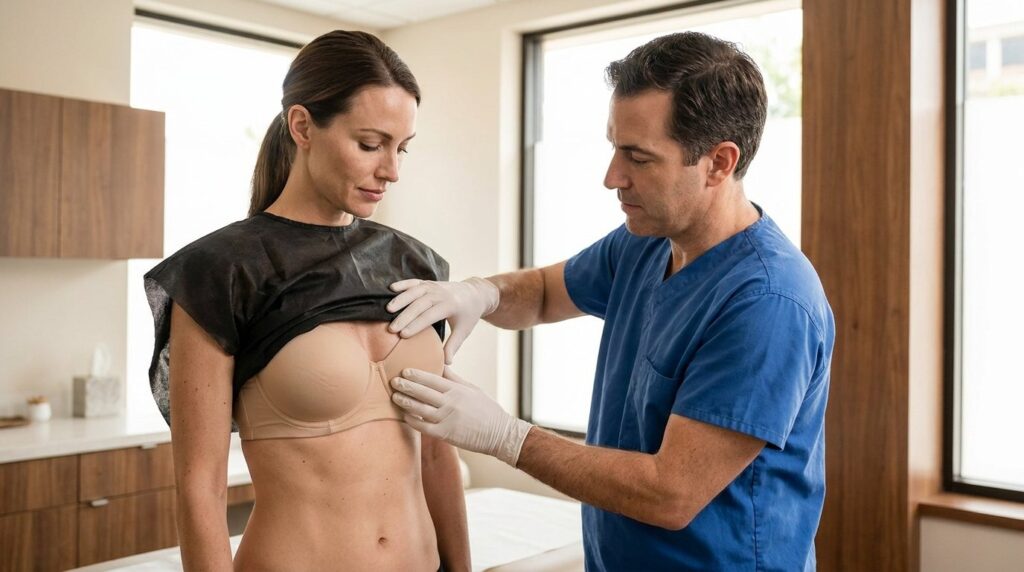
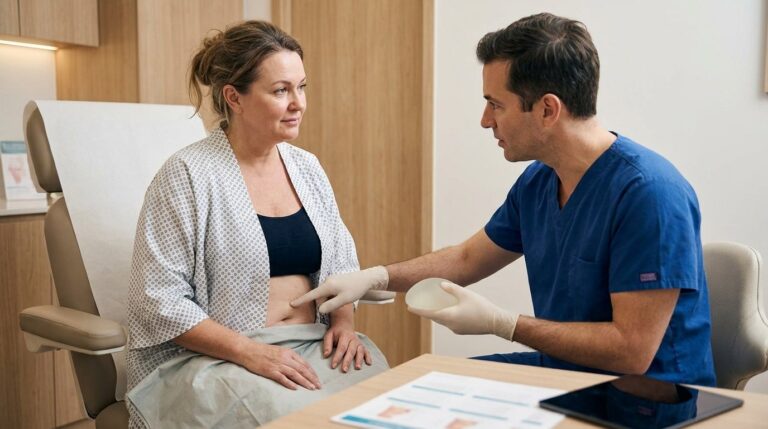
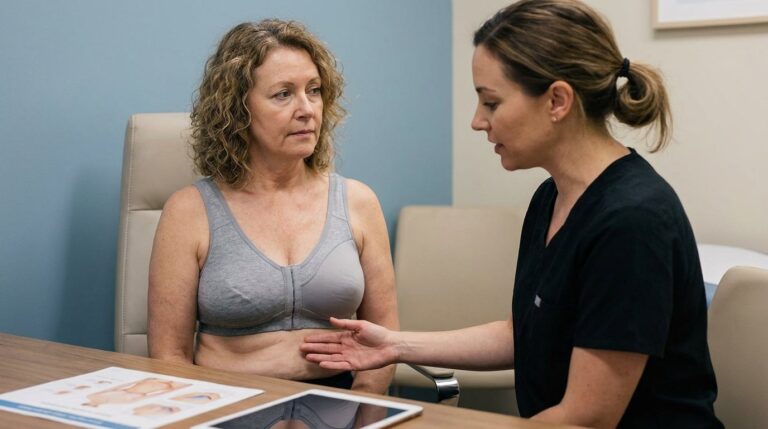
If you are not sure whether the issue is sagging, lost volume, or both, this is where an in-person exam becomes important. A consultation should include photos, skin assessment, breast measurements, nipple position, scar planning, and a discussion about whether you want a perkier shape, more fullness, or both.
⚠️ A lift is not mainly a size procedure A breast lift improves position and contour, but it does not reliably replace lost upper-pole fullness on its own. If your main concern is emptiness rather than droop, you may need a different plan.
- ✓Your weight has been stable for a sustained period, not still actively dropping
- ✓Your nipples sit low, point downward, or the breast skin feels loose
- ✓You are not smoking, or you can stop fully before and after surgery as advised
- ✓You can maintain good protein intake and follow recovery instructions
- ✓You understand that scars are part of breast lift surgery
What makes someone a better or poorer candidate?
The best candidates are usually close to the weight they plan to maintain and are choosing surgery for shape rather than hoping it will solve ongoing body-change issues. This sounds simple, but it is a big dividing line between patients who stay happy with the result and those who feel the breasts changed again too soon.
A stronger candidate usually has enough breast tissue to reshape, skin laxity that can be improved by tightening, and no untreated medical issues that would raise healing risk. If you have had massive weight loss, your surgeon may also look for thinning skin, asymmetry, wide areolas, or chest wall changes that make planning more complex but not impossible.
A poorer candidate is not necessarily someone who can never have surgery. More often, it is someone who should not have it yet. Examples include active smoking, unstable weight, untreated anaemia, poor diabetes control, or a nutrition pattern that suggests slow healing. After bariatric surgery or major weight loss, checking protein status and general nutritional health can be very sensible before elective body-contouring procedures.
Future pregnancy can also affect timing. A lift does not prevent every future breast change, and pregnancy can stretch the tissues again. Many women still choose surgery before pregnancy, but if you are planning a pregnancy soon, it is worth discussing whether waiting would protect your long-term result.
If your main concern is skin looseness in more than one area, breast surgery may also be part of a wider post-weight-loss plan. Some patients who qualify for a lift also look into upper-body contouring such as an arm lift or lower-body skin surgery at a different stage. If that sounds familiar, our article on thigh lift candidacy after major weight loss explains how surgeons think about timing and tissue quality after large weight changes. Two in three of our breast lift patients have something else done alongside it, usually breast augmentation, a tummy tuck or liposuction. If that is your situation, plan your time off and your recovery around everything you are having, not the lift alone.
Stable weight, clear breast sagging, good general health, no nicotine use, and realistic expectations about scars and shape.
Ongoing weight loss, smoking, poor nutrition, untreated medical issues, or expecting a lift alone to restore major lost volume.
Do I need a lift alone, a lift with implants, or a lift with fat transfer?
This is one of the most important decisions after weight loss. A lift alone works best when you still have enough breast tissue, and your main problem is droop, stretched skin, or low nipple position. In that situation, the surgeon can reshape what you already have and move it higher.
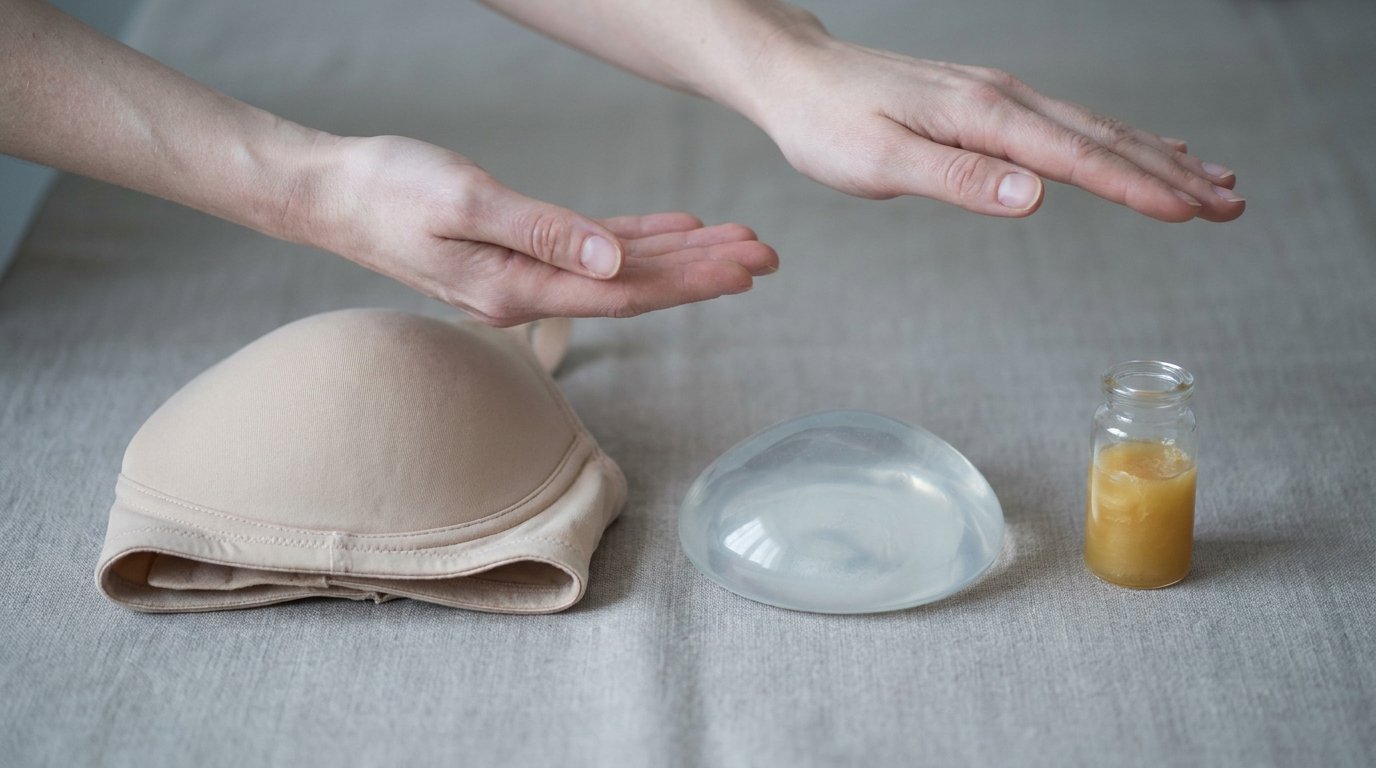
A lift with implants is often considered when the breast looks empty at the top and you want a fuller bra shape, more projection, or more volume than your own tissue can provide. Implants can add upper-pole fullness more reliably than a lift alone, but they also bring implant-specific trade-offs such as long-term monitoring and the possibility of future revision.
A lift with fat transfer may suit some patients who want a softer, more modest volume increase without implants, but it depends on having enough donor fat and accepting that fat graft take is not fully predictable. After major weight loss, some patients are quite lean, which can limit this option. If you are deciding between shape change and volume replacement, two related reads may help: breast lift vs implants and breast lift with fat transfer.
A simple way to think about it is this: if you like your breast volume in a supportive bra but not without one, a lift alone may be enough. If even in a bra you feel the breast looks too empty, a lift plus volume is more likely to match your goal.
What should I expect from scars, recovery and results after weight loss?
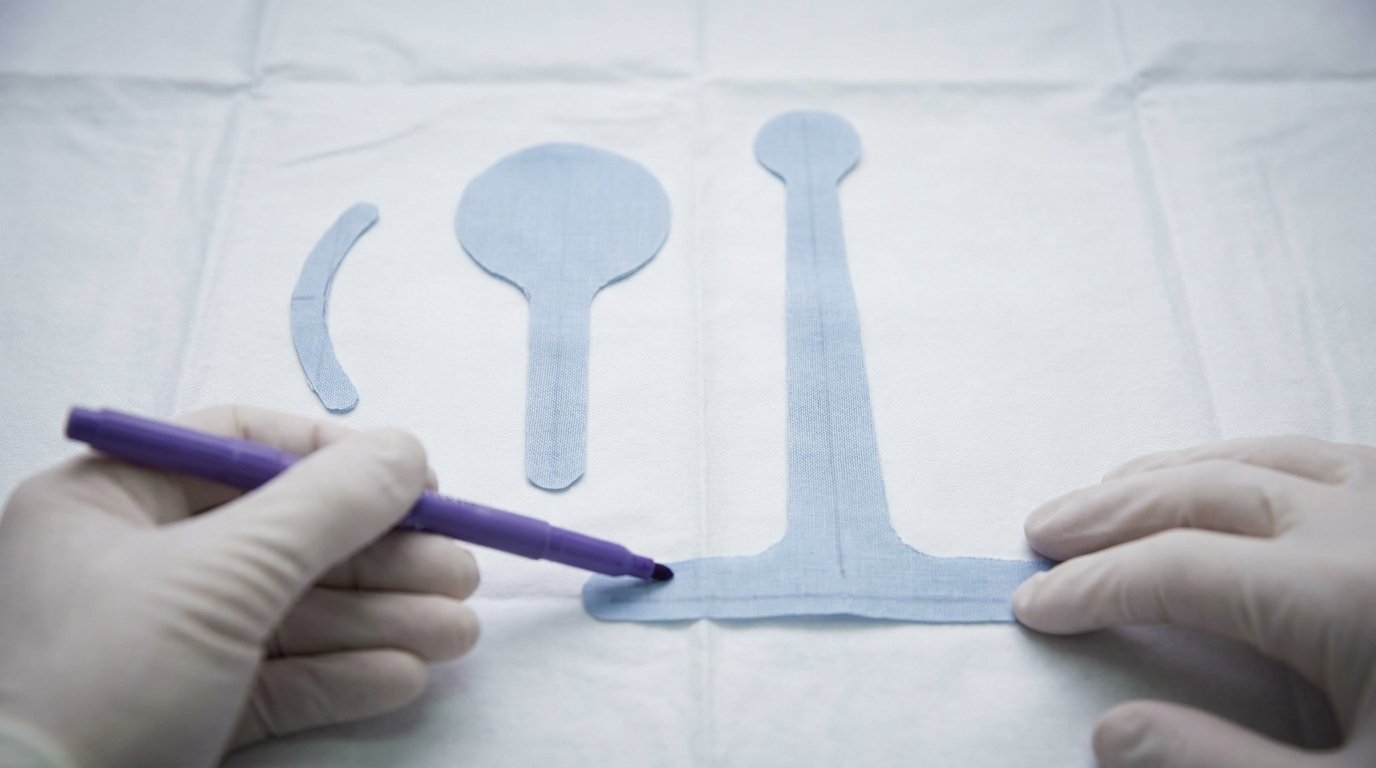
Most patients know a breast lift leaves scars, but many do not realise scar pattern depends on how much skin has to be removed. After weight loss, the skin envelope is often more stretched, so a small scar technique is not always enough. For some women, a surgeon may recommend a vertical scar or an anchor-pattern scar because it gives better control of excess skin and breast shape.
Recovery is usually manageable, but it is still real surgery. The first days are more about tightness, swelling, and movement awareness than severe pain. The Aesthetic Society and ASPS both describe breast lifting as a procedure that involves a meaningful recovery period, with early swelling and activity limits that improve gradually over weeks rather than days. Most people are walking around quickly, but normal energy, sleeping comfort, and arm movement take longer to settle.
Weight-loss patients should expect tissue quality to influence the final shape. If the skin has been heavily stretched for a long time, the breast may not hold a very round, very upper-full look without added volume. That is not a failed result; it is part of matching the operation to the tissue you have.
If you are comparing recovery plans before travelling, our article on breast lift recovery week by week gives a fuller timeline. For stay length and practical travel planning, how long to stay in Turkey for breast surgery is the most relevant companion read.
You should also be prepared for the result to evolve. The breasts often sit higher and firmer early on, then soften and settle over the following months. Swelling, scar maturation, and tissue relaxation all play a role, so judging your final shape too soon usually causes unnecessary worry.
📋 Scars and shape are linked In post-weight-loss breasts, a longer scar sometimes gives a better shape and more stable lift. A shorter scar is not automatically the better operation.
How do Turkey logistics, quotes and clinic choice affect the decision?
For international patients, candidacy is not only medical. It is also logistical. You need enough time for consultation, surgery, early checks, and a safe first stage of recovery before flying home. A proper plan should cover pre-op assessment, the operation itself, aftercare, medication guidance, support garments if used, transfers, and who you contact if something worries you after discharge.
Cost is best understood by what changes the quote rather than by headline figures. A personalised quote usually depends on whether you need lift alone or lift plus implants, the complexity of the scar pattern, the surgeon’s experience, hospital standards, anaesthesia, overnight stay needs, and what is included in aftercare. If you are comparing packages, make sure you are comparing like with like. The article on what an all-inclusive surgery package in Turkey includes can help you read a quote more carefully.
Clinic choice matters more after weight loss because tissues can be less forgiving. Look for a surgeon with specific breast and post-weight-loss contouring experience, clear consultation notes, honest scar discussion, and accreditation or recognised specialist training. EBOPRAS is one recognised European board credential in plastic surgery, and the NHS advises patients considering cosmetic surgery to check the qualifications of the surgeon and the standards of the facility.
Communication is not a small detail. Slow replies, vague answers, and shifting package details often lead to the dissatisfaction patients remember most. Good coordination should feel organised before you book, not only after payment.
- →Ask how candidacy is assessed: The clinic should ask about weight history, smoking, pregnancies, medical conditions, and your exact breast concerns.
- →Ask what the quote includes: Check hospital, anaesthesia, garments, medications, follow-up visits, transfers, and hotel details.
- →Ask what happens if your plan changes: A proper consultation may conclude that lift alone is not enough, or that surgery should be delayed until weight is stable.
- →Ask about aftercare from abroad: You should know who answers urgent questions once you are back home and when remote follow-up is arranged.
Frequently Asked Questions
References
- 📎NHS cosmetic procedures guidance
- 📎ASPS cosmetic procedures
- 📎PubMed: post-bariatric breast surgery mastopexy nutrition smoking wound healing
- 📎EBOPRAS
Related Articles

You Might Also Like

Related articles
Our specialists
 Clineca SpecialistErkan PinegözPlastic & Reconstructive Surgery
 Clineca SpecialistHakan AktaşPlastic & Reconstructive Surgery
 Clineca SpecialistOrkun UzuneyüpoğluPlastic & Reconstructive Surgery
 Clineca SpecialistSalim İskenderPlastic & Reconstructive Surgery
 Clineca SpecialistEngin SelamioğluPlastic & Reconstructive Surgery
 Clineca SpecialistCem AydınPlastic & Reconstructive Surgery
 Clineca SpecialistAlperen ÖnalEar, Nose & Throat (ENT)