
In this article
- How long do endoscopic brow lift results usually last?
- What affects how long the result lasts?
- Does endoscopic brow lift last as long as other brow lift methods?
- What does the result look like over time?
- Can the result be maintained or revised later?
- What should international patients know about travel, recovery and cost planning?
If you are researching how long do endoscopic brow lift results usually last, you are really asking two things at once: how long the lifted look stays visible, and how much normal ageing will still continue. That matters because brow surgery can refresh the upper face nicely, but it does not freeze time. Knowing what tends to last, what tends to soften, and what can shorten the result helps you judge the procedure more realistically.
How long do endoscopic brow lift results usually last?
In most patients, an endoscopic brow lift gives a long-lasting improvement rather than a short-term change. The brow position achieved with surgery can remain noticeably better for many years, but the exact lifespan is not identical for everyone. You will still keep ageing after surgery, so the result usually fades gradually rather than suddenly “wearing off”.
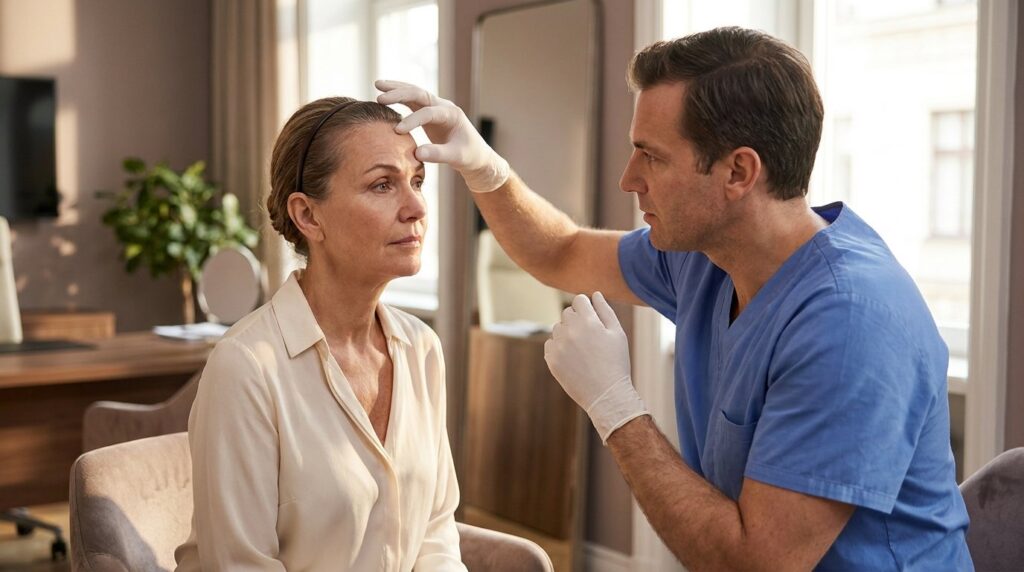
An endoscopic brow lift uses small incisions hidden in the hair and a camera-guided approach to lift and secure the brow tissues. Compared with non-surgical brow treatments, it is designed to create a more durable change in brow height and forehead shape. The American Society of Plastic Surgeons (ASPS) describes brow lift surgery as a procedure that can improve forehead lines and reposition a low or sagging brow, but it does not promise permanent immunity from future ageing.
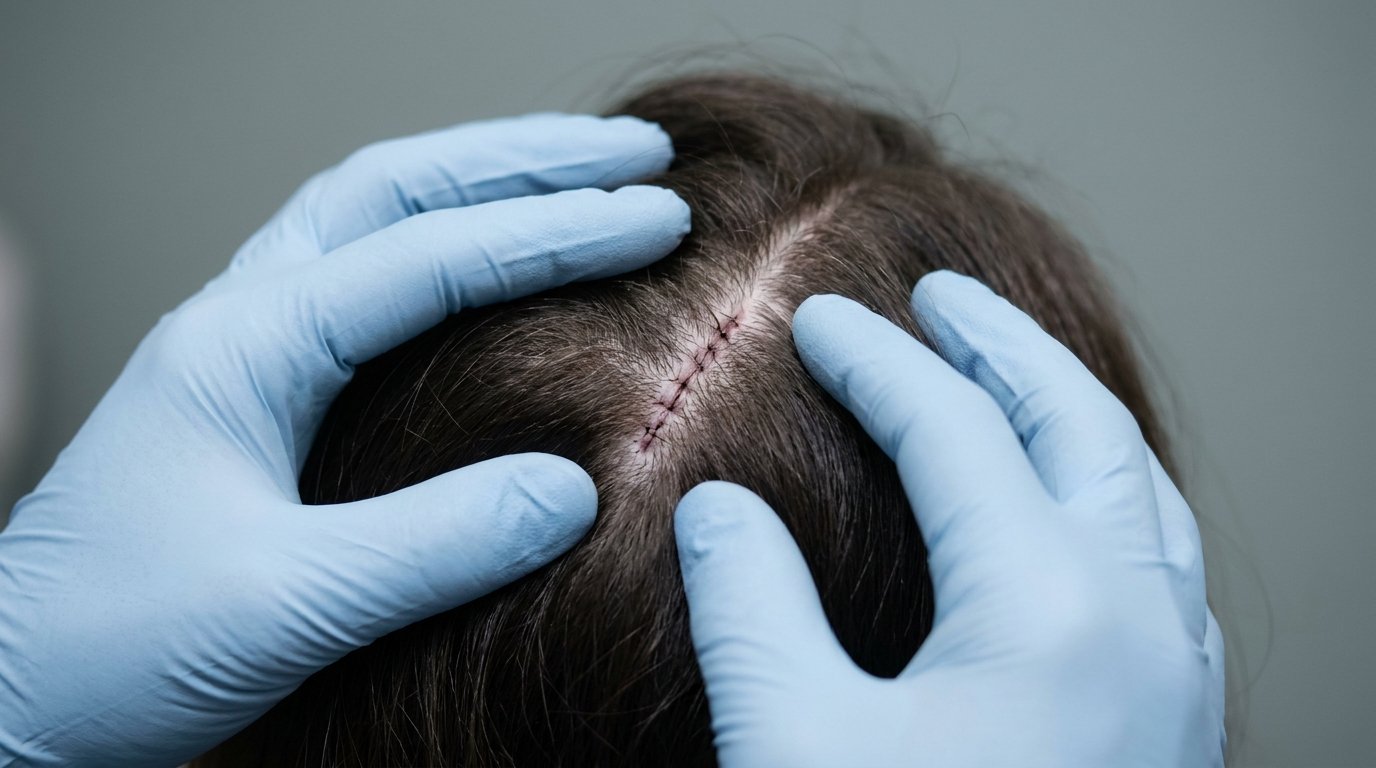
A helpful way to think about it is this: the operation can set the clock back, but the clock keeps moving. Many patients continue to look more open and less heavy in the brow area for a long time, even as some descent slowly returns over the years. If your skin is thick, your brows are naturally heavy, or you have strong downward pull from forehead muscles, the lift may soften earlier than in someone with lighter tissues and good skin quality.
If you are comparing options, a brow lift procedure overview is useful for understanding where endoscopic surgery sits among other brow-lifting techniques.
📋 A realistic expectation The result is long-lasting, but not fixed forever. Most changes soften gradually because skin, fat and supporting tissues continue to age.
What affects how long the result lasts?
The biggest factors are your starting anatomy, your age-related tissue quality, and the surgical plan. Someone with mild brow descent and good skin elasticity may keep a very crisp result longer than a patient with heavier brows, sun-damaged skin, or marked forehead laxity. This is one reason why two people can both have the same operation yet age through it differently.
Technique also matters. In an endoscopic brow lift, the tissues are released and then fixed in a higher position. How well that correction matches your anatomy, and whether the chosen lift vector suits your face, can affect longevity. A well-selected patient often does very well with the endoscopic approach, but in some cases a different brow lift method may be more suitable if there is significant skin excess or a very heavy forehead.
Your habits after surgery matter more than many patients expect. Smoking can impair healing and tissue quality. Major weight swings can change facial volume and skin tension. Heavy sun exposure also contributes to collagen breakdown over time; the NHS and Mayo Clinic both emphasise that skin continues to age from both intrinsic and environmental factors, and that applies after cosmetic surgery too.
There are also practical issues that influence how the result looks in real life. Botox in the forehead after you have healed may help maintain a smoother upper face in some patients, but it does not replace surgery. Eyelid ageing can also affect how “fresh” the brow area appears. Sometimes the brow is still well positioned, but hooding from the upper eyelids becomes the feature a patient notices most.
- ✓Better skin elasticity usually supports a longer-lasting lifted look.
- ✓Heavy brows, thick skin and strong frown muscles can make the lift soften sooner.
- ✓Smoking, sun exposure and large weight changes may shorten how crisp the result looks.
- ✓A well-matched technique matters as much as the operation itself.
Does endoscopic brow lift last as long as other brow lift methods?
The answer depends on what problem is being treated. An endoscopic brow lift is less invasive than some older open techniques and often appeals to patients who want smaller scars and a somewhat easier recovery. For the right patient, it can produce a very satisfying and durable result. But when brow droop is severe, or the forehead is especially heavy, another technique may hold better or create a more predictable correction.
That does not mean endoscopic surgery is the “weaker” option. It means longevity and suitability are linked. A surgeon chooses the method based on your anatomy, hairline, skin quality, degree of brow descent, and scar preferences. In practice, a result that is slightly more conservative but natural can age better than an over-tight lift that never really suited the face.
Patients also mix up brow longevity with wrinkle recurrence. Forehead lines and frown lines may improve after surgery, especially if the pulling muscles are adjusted, but muscle activity and skin ageing continue. So you may still develop expression lines later even if the brow itself remains better positioned.
If your main concern is upper eyelid hooding rather than true brow descent, eyelid surgery may be part of the better answer than lifting the brow alone.
What does the result look like over time?
Right after surgery, the brow often looks higher than the final settled position. That early look is shaped by swelling, tightness and overcorrection that may be part of the plan. Over the first weeks and months, the tissues settle. A patient who worries at week two that the brow is “too high” is often seeing a temporary stage rather than the final result.
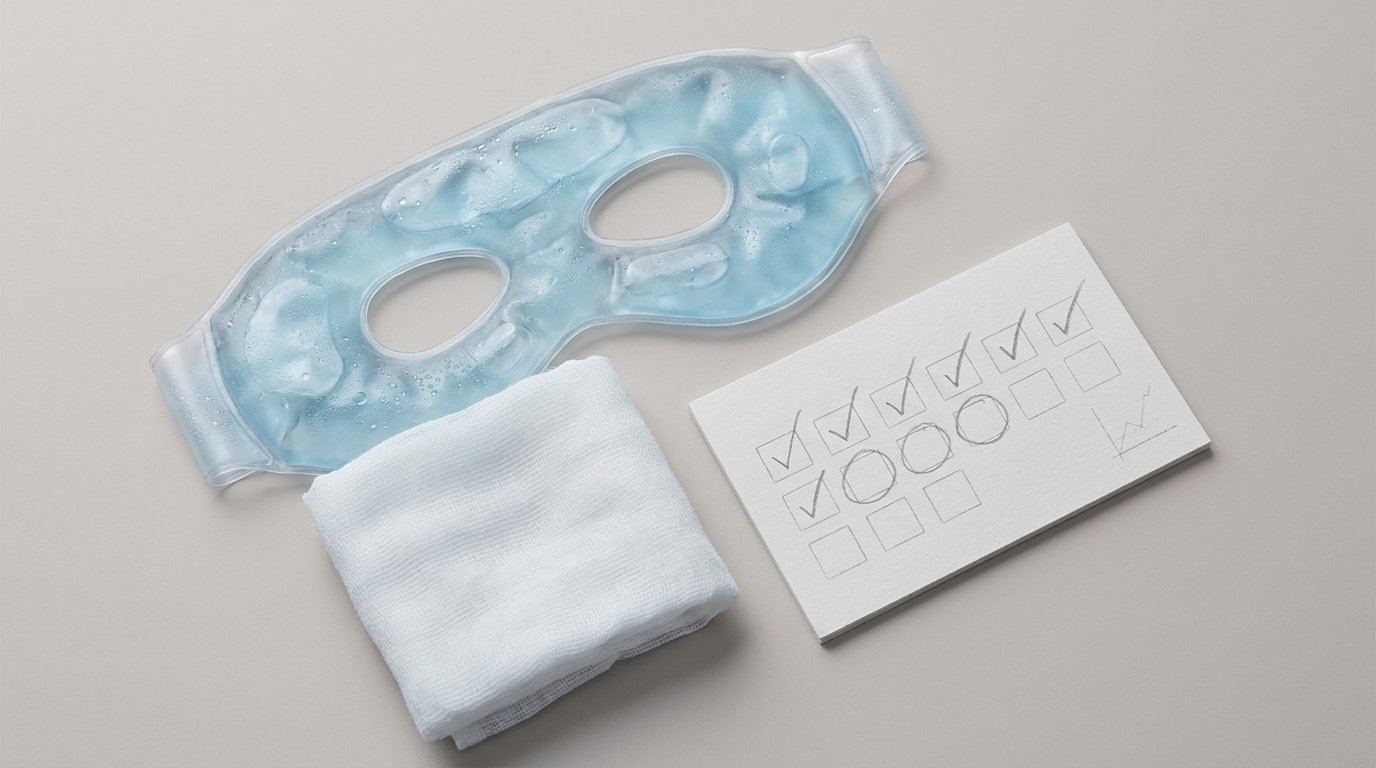
By the time swelling has largely eased, the result usually looks more natural and integrated with the rest of the face. The upper eyelid area may seem more open, and the outer brow may look less heavy. Then the long middle phase begins: this is the period when the result tends to feel stable and simply part of your face.
Years later, subtle ageing continues. The brow can descend somewhat, forehead skin may relax, and the eyelids may change too. That does not automatically mean the surgery has failed. Many patients still look better than they would have without surgery, even if the result is softer than it was in the first year.
Can the result be maintained or revised later?
Maintenance usually means looking after the skin and protecting the overall result, not trying to “lock in” the surgery permanently. Good sun protection, stable weight, smoking avoidance and sensible skincare all help the upper face age more kindly. If forehead lines or frown lines become the main issue later, some patients use non-surgical treatments after they have fully healed.
Revision is possible, but it should not be treated lightly. A second procedure may be discussed if the original lift was not enough, if asymmetry remains once healing is complete, or if ageing years later creates a new concern. Revision planning is more complex because scar tissue and altered anatomy can change what is feasible.
If you are also considering related facial surgery, it is worth understanding how the brow interacts with the eyelids and cheeks. For some patients, a combined facial plan makes more sense than focusing on one area in isolation. Pages on eyelid surgery or a facelift can help frame that broader discussion.
⚠️ Do not judge too early Asymmetry, high brow position and tightness can be part of early healing. Final decisions about revision are usually delayed until swelling settles and tissues have matured.
What should international patients know about travel, recovery and cost planning?
For health-tourism patients, the lifespan of the result is only one part of the decision. You also need to know how long to stay, what follow-up looks like, and how to choose a properly qualified surgeon. An endoscopic brow lift is usually an outpatient-style facial procedure, but you still need time nearby for early checks and for the first stage of swelling and bruising to settle.
Most patients should expect a recovery period where the forehead feels tight, the scalp may feel numb or odd, and bruising around the eyes can happen. Returning to desk work is often quicker than returning to vigorous exercise. Flying home too soon can make follow-up harder if swelling, wound concerns or asymmetry need review, so your travel plan should leave room for in-person assessment before departure.
On cost, the right question is not just the surgeon’s fee. A meaningful quote often includes the surgeon, anaesthesia, operating theatre or hospital costs, garments or dressings if needed, medications, transfers, accommodation support and scheduled follow-up. If you request a personalised treatment plan through the online consultation page, ask exactly what is included and what would count as an extra.
Safety should carry more weight than convenience. Look for a surgeon whose training and scope of practice match facial aesthetic surgery, and check whether credentials are transparent on the clinic’s surgeon information page. In Europe, board standards and examination frameworks such as EBOPRAS can be useful markers of recognised specialist training, while BAAPS and ASPS both stress informed consent and realistic expectations in cosmetic surgery.
Clear surgeon identity, transparent qualifications, named hospital setting, a realistic recovery plan and no pressure to book quickly.
Guaranteed results, vague package wording, no named surgeon before deposit, or pressure to fly home before the first proper post-op review.
- →Ask who performs the surgery and where it takes place.
- →Ask how many days of local stay are advised before flying.
- →Ask what happens if you need an unexpected review after going home.
- →Ask for a written list of inclusions, exclusions and follow-up arrangements.
Frequently Asked Questions
References
- 📎American Society of Plastic Surgeons: Cosmetic Procedures
- 📎NHS: Cosmetic procedures
- 📎EBOPRAS
- 📎PubMed search: endoscopic brow lift long term outcomes
Related Articles
You Might Also Like



Related articles
Our specialists
 Clineca SpecialistErkan PinegözPlastic & Reconstructive Surgery
 Clineca SpecialistHakan AktaşPlastic & Reconstructive Surgery
 Clineca SpecialistOrkun UzuneyüpoğluPlastic & Reconstructive Surgery
 Clineca SpecialistSalim İskenderPlastic & Reconstructive Surgery
 Clineca SpecialistEngin SelamioğluPlastic & Reconstructive Surgery
 Clineca SpecialistCem AydınPlastic & Reconstructive Surgery
 Clineca SpecialistAlperen ÖnalEar, Nose & Throat (ENT)