

Have a question about Otoplasty?
In this article
- How long does swelling usually last after otoplasty?
- When do ears usually settle into their final shape?
- What is normal week by week, and what tends to worry patients most?
- What can make swelling last longer after ear pinning?
- When should swelling after otoplasty be checked urgently?
- How can you help ears settle well after surgery?
If you are asking how long does swelling last after otoplasty and when do ears settle, you are usually trying to plan normal life again: sleeping, travel, work, photos, and the point when your ears stop looking "freshly done." That is a sensible question, because ear pinning recovery is often less painful than people expect, but the shape changes can look uneven before they finally calm down.
How long does swelling usually last after otoplasty?
Most people see the biggest swelling in the first few days, then a noticeable drop over the first two to three weeks. After that, recovery becomes less dramatic. The ears often still hold mild residual swelling for several more weeks, especially along the folds and around the incision line behind the ear. In practical terms, many patients feel socially presentable within a few weeks, but the ears can continue refining for a few months.
That longer tail matters. Ear cartilage has been reshaped, and the skin and soft tissue around it need time to relax into the new position. This is why ears can look slightly too close to the head, a little firm, or mildly uneven early on. That does not always mean there is a problem.
The NHS notes that after cosmetic procedures, patients should expect healing to take time and should follow their own surgeon’s aftercare closely. Peer-reviewed papers in journals such as Aesthetic Plastic Surgery and JPRAS also describe otoplasty as a procedure where swelling, asymmetry early on, and gradual settling are normal parts of recovery rather than instant-endpoint events.
A simple way to think about it is this: the first phase is obvious swelling, the second phase is subtle settling. The first phase is measured in days to weeks. The second is measured in weeks to months.
Because recovery varies, use any online timeline as a general guide only and follow your own surgeon’s instructions if they differ.
📋 A normal but frustrating part of recovery Mild asymmetry in the first weeks can happen because the two ears do not always swell at the same rate.
When do ears usually settle into their final shape?
Most ears do not truly “settle” in the first week, even if the head bandage is off and the main swelling has started to improve. Early on, the ears can sit a little tighter to the head than expected. This is partly due to swelling and partly due to the internal support stitches holding the cartilage in its new shape.
For many patients, the result starts to look much more natural by the end of the first month. Even then, the tissues are still maturing. The skin behind the ear may feel firm, and the ear fold may look sharper than it will later. By around the second to third month, the ears usually look less tense and more like part of the face rather than a fresh post-op feature.
Final judgment should be patient. In facial surgery, subtle swelling can linger longer than people think, and that includes the ears. If one ear settles a little slower, that can still be within normal healing.
If you are also wondering about sleeping position during this stage, our article on how long to sleep on your back after otoplasty can help you protect the new shape while swelling is still active.
Week by week, the ears look less puffy, the edges soften, and the position becomes easier to assess in photos and in the mirror.
A growing difference between the ears, worsening redness, discharge, or a sudden change in position needs surgeon review.
What is normal week by week, and what tends to worry patients most?
The first week is often the most emotionally difficult, even if discomfort is manageable. The ears may feel stiff, numb, swollen, or oddly close to the head. That look is not the final result. Freshly operated ears commonly look exaggerated before they soften.
By the second week, bruising is often fading and swelling is less obvious to other people, but you will still notice it yourself. One ear may appear more folded or slightly puffier than the other. Small ups and downs can happen, especially after sleeping awkwardly or being more active.
From weeks three to six, patients usually stop focusing on swelling every day because change becomes slower. This is the period when the ears often start to feel more like their own again. The skin behind the ear may still be tender, and the scar can feel lumpy or firm before it flattens.
One of the questions patients ask most often is whether the ears are “stuck” if they still look close to the head at a few weeks. Usually, that is too early to tell. A proper assessment makes more sense once the early healing phase has passed.
If you want a broader look at procedure risks and recovery patterns, our article on whether otoplasty is safe for adults adds useful context beyond swelling alone.
- →First week: swelling, tightness, redness, and a very fresh look are common.
- →Second to third week: the main swelling often drops, but the ears may still look uneven.
- →Weeks four to six: shape is more stable, though still not fully matured.
- →Following months: firmness eases and the result usually looks more natural.
What can make swelling last longer after ear pinning?
The biggest factor is simply your own healing pattern. Some people swell lightly and settle quickly; others hold fluid and tissue firmness for longer, even when surgery has gone well. Cartilage memory also matters. Ears that needed more reshaping can look firmer for longer in the early months.
Aftercare plays a real role too. Pressure on the ears while sleeping, skipping the recommended headband, early exercise, smoking, or returning too quickly to busy travel can all make swelling linger. Even minor bumps can irritate healing tissue.
Long-haul travel is not automatically a problem, but timing matters. If you are coming to Turkey for surgery, many patients plan to stay until their early checks are done and the surgeon is happy with the initial healing. A smoother trip usually comes from good organisation, clear instructions, and fast communication about dressings, medication, and follow-up.
If your package includes hotel and transfers, it helps to know exactly what practical support is included before you book. Our article on what an all-inclusive surgery package in Turkey usually includes explains the logistics patients often overlook.
On the cost side, there is no single standard quote. The price can vary with the surgeon’s experience, the clinic or hospital setting, whether anaesthesia and follow-up dressings are included, and whether your plan covers accommodation and transfers. A personalised price is normally confirmed after consultation and photo or in-person assessment.
⚠️ Do not judge the result too early Trying to assess symmetry day by day often creates unnecessary stress because swelling changes faster than the underlying result.
When should swelling after otoplasty be checked urgently?
Some swelling is expected, but worsening swelling is different from normal recovery. Contact your surgeon promptly if one ear suddenly becomes much more swollen, especially if it feels hot, hard, or increasingly painful. That can suggest a collection of blood under the skin, called a haematoma, which needs review.
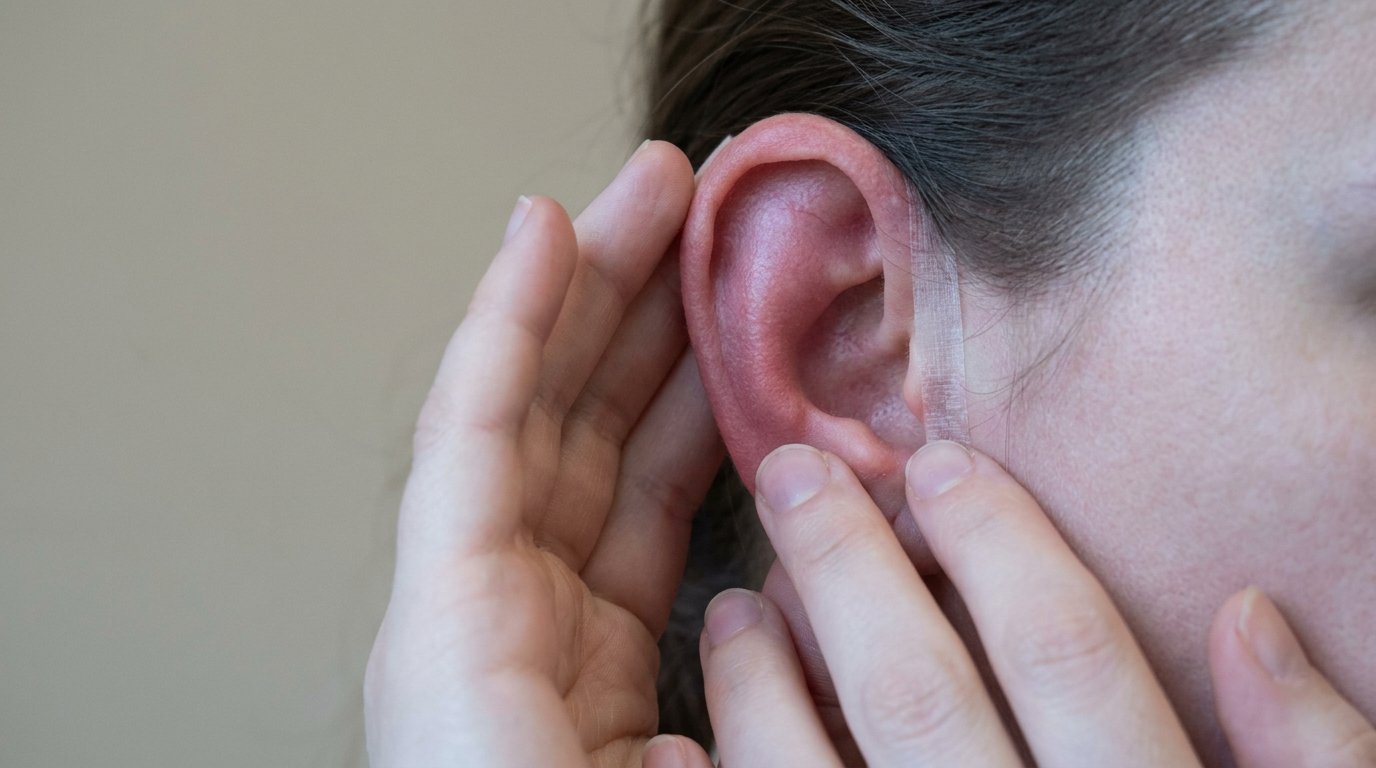
The NHS advises seeking medical help after surgery if you have signs of infection such as increasing redness, discharge, fever, or worsening pain. In otoplasty, you should also take seriously any foul smell from the dressing, a wound that starts opening, or skin that looks dark or poorly supplied.
A small amount of numbness, tightness, and tenderness can be normal. Rapidly increasing pain, marked asymmetry that appears suddenly, or drainage that is yellow or bloody beyond the expected early phase is not something to monitor casually at home.
When choosing a clinic abroad, this is why accredited facilities and a clear aftercare route matter so much. You want to know who to message, how quickly they reply, and what happens if your concern comes up at night or after you fly home.
Mild puffiness, firmness behind the ear, and slight side-to-side difference in the first weeks are often part of normal healing.
Sudden swelling, increasing pain, spreading redness, fever, bleeding under the skin, or discharge should be assessed without delay.
How can you help ears settle well after surgery?
The best help is not a special cream or trick. It is protecting the ears while they heal. Sleep exactly as advised, keep pressure off the ears, wear the headband as instructed, and avoid exercise or contact that could bend the ear before the cartilage is stable.
Keep expectations realistic with photos too. Early photos can be misleading because they catch swelling and stiffness better than progress. Comparing one day to the next rarely helps. Comparing week to week is far more useful.
Choose your surgeon and facility carefully. For surgery in Turkey, look for a properly accredited hospital or clinic setting, a plastic surgeon with relevant ear surgery experience, and a team that gives written aftercare rather than vague reassurance. EBOPRAS is one recognised European board in plastic surgery, and professional standards from bodies such as BAAPS also reinforce the importance of informed consent, proper aftercare, and realistic expectations.
If communication and planning feel unclear before surgery, that often becomes more stressful once recovery starts. The practical side matters almost as much as the operation itself.
Frequently Asked Questions
References
- 📎NHS: Cosmetic procedures
- 📎PubMed search: otoplasty complications hematoma infection cartilage
- 📎PubMed search: otoplasty postoperative swelling patient satisfaction
- 📎EBOPRAS
Related Articles


You Might Also Like


Related articles



Our specialists
 Clineca SpecialistErkan PinegözPlastic & Reconstructive Surgery
 Clineca SpecialistHakan AktaşPlastic & Reconstructive Surgery
 Clineca SpecialistOrkun UzuneyüpoğluPlastic & Reconstructive Surgery
 Clineca SpecialistSalim İskenderPlastic & Reconstructive Surgery
 Clineca SpecialistEngin SelamioğluPlastic & Reconstructive Surgery
 Clineca SpecialistCem AydınPlastic & Reconstructive Surgery
 Clineca SpecialistAlperen ÖnalEar, Nose & Throat (ENT)