
Have a question about Upper Eyelid Blepharoplasty?
In this article
- How do you know whether the problem is your eyelids, your brows, or both?
- Who usually benefits from combining a brow lift with upper eyelid surgery?
- What are the trade-offs of doing both procedures together?
- What is recovery like if you combine them, especially if you are travelling to Turkey?
- Should you combine these surgeries with other facial procedures as well?
If you are asking should I combine a brow lift with eyelid surgery, the real issue is usually not how much skin sits on the upper lid, but where that heaviness starts. In some faces the eyelid is the main problem; in others, a low brow is pushing tissue downward and making the lids look more hooded than they really are.
How do you know whether the problem is your eyelids, your brows, or both?
Upper eyelid blepharoplasty removes or reshapes extra skin and sometimes a small amount of fat from the upper lid. A brow lift works higher up. It raises a descended brow and can soften the heavy, tired look across the upper eye area. These procedures can work well together, but they do different jobs.
This matters because removing lid skin alone does not correct a brow that has dropped. If the brow is already sitting low, an upper blepharoplasty on its own may help, but it can also leave you looking under-corrected. In some people, aggressive skin removal without addressing brow position can even make the upper eye area feel tight or look less natural.
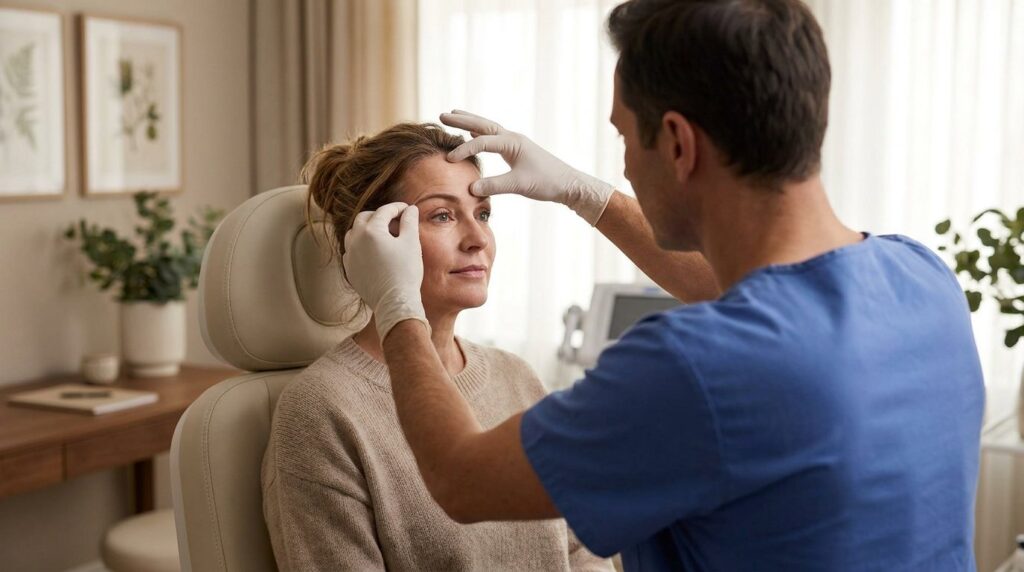
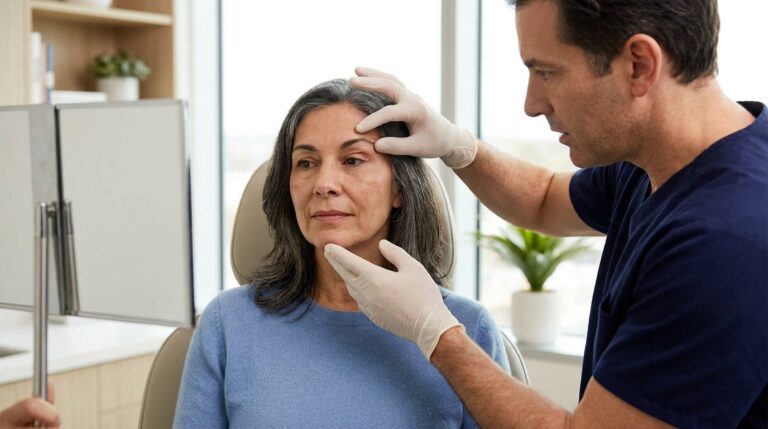
A surgeon usually works this out during an exam, not from one photo. They look at brow position, forehead movement, skin quality, eyelid muscle tone, and whether you are unconsciously lifting your brows to keep your eyes open. That last point is common. Some patients think they only have excess lid skin, but once the forehead is relaxed, the low brow becomes more obvious.
If you want a clearer picture of how the two operations differ, this article on the difference between brow lift and upper eyelid surgery helps explain what each one is designed to fix.
You have hooding on the upper lids and the outer brow sits low, especially if the heaviness is worse toward the sides.
Your brow position is stable and the main issue is true excess upper lid skin rather than brow descent.
If the heaviness is mainly in the outer brow, a temporal or limited brow lift may be discussed instead of a full brow lift.
Who usually benefits from combining a brow lift with upper eyelid surgery?
The best candidates are usually people with two things happening at once: real upper lid hooding and a brow that has fallen from its natural position. This often shows up as heaviness at the outer upper eyelid, a tired expression even when you feel rested, or makeup disappearing under folded skin because the brow is pressing tissue downward.
Patients in their forties and beyond ask about this most often, but age alone is not the deciding factor. Some younger patients have naturally low-set brows or early brow descent and may still benefit from a combined plan. The key is anatomy, not age.
Surgeons may be more likely to suggest combining the procedures when the brow sits at or below the brow bone, when the outer brow tail has dropped, or when lifting the brow manually during consultation suddenly makes the eyelid look much less heavy. That simple exam can be very revealing.
You may be less likely to need both if your brows are already in a good position and the extra skin remains even when the brow is supported. In that situation, adding a brow lift can create more surgery than you actually need.
For a more detailed look at candidacy and trade-offs, see brow lift with upper eyelid surgery: who benefits, recovery and trade-offs.
📋 Vision symptoms change the discussion If droopy upper lids are affecting your visual field, surgeons will also assess function, not only appearance. The NHS notes that eyelid surgery may sometimes be considered when excess skin interferes with vision.
What are the trade-offs of doing both procedures together?
The main advantage is balance. When brow descent and eyelid skin are both contributing to heaviness, treating both areas can produce a more coherent result than correcting only one. It also means one anaesthetic plan, one initial recovery period, and one trip if you are travelling for surgery.
The trade-off is that recovery is usually a little more involved. Swelling can extend higher into the forehead, tightness may be stronger for the first days, and the brow area can feel strange or numb for longer than the eyelids. You also add another set of scars, although their visibility depends on the technique used. Endoscopic brow lift scars are typically small and hidden in the hairline, while other methods may leave longer incisions.
There is also a judgement issue. A brow lift can improve upper eye heaviness, but if it is overdone, the result can look surprised or less natural. Good planning matters more than doing more surgery. This is why a conservative, anatomy-led approach is usually safer than asking for the most dramatic lift possible.
The American Society of Plastic Surgeons describes brow lift and eyelid surgery as separate procedures with different goals, and that distinction is important when planning combined surgery. The aim is not simply to remove more tissue. It is to restore proportion in the upper third of the face.
If your concern is mostly healing time after the lid part of surgery, this page on how long it takes to heal after upper eyelid blepharoplasty is useful background.
What is recovery like if you combine them, especially if you are travelling to Turkey?
Recovery is still usually manageable, but expect the first week to feel more noticeable than upper blepharoplasty alone. Bruising and swelling around the eyes are common. With a brow lift added, you may also feel forehead tightness, numbness in the scalp or brow area, and more tenderness when washing your hair or raising your eyebrows.
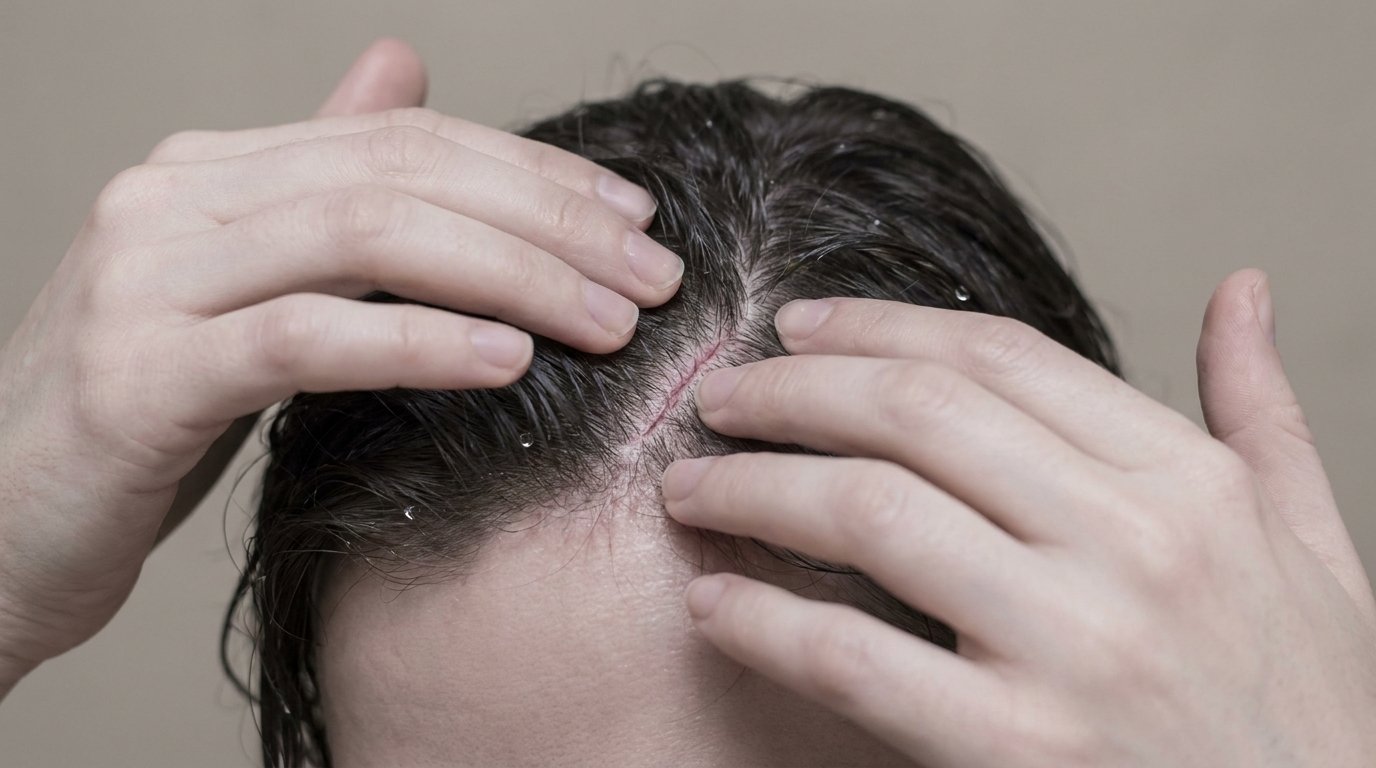
Many patients look socially presentable sooner than they feel completely normal. Stitches, taping, and visible bruising often settle in stages rather than all at once. Final brow position and softening of the tissues can take longer than the eyelid skin itself to settle.
For medical tourists, the safest plan is not to treat this like a weekend procedure. You need time for pre-op assessment, surgery, early checks, and at least one in-person review before flying home. Ask exactly who will see you after surgery, what happens if swelling is uneven, and whether remote follow-up is structured or informal. Communication speed and organisation make a big difference to how secure patients feel.
If you are comparing quotes, focus less on the headline figure and more on what the package actually covers. A proper quote usually sets out surgeon and hospital fees, anaesthesia, medication, transfers if included, hotel arrangements if included, and the aftercare schedule. This article on what an all-inclusive surgery package in Turkey may include can help you compare offers more clearly.
Choosing a clinic and surgeon
For a brow lift combined with eyelid surgery, ask whether the operating surgeon regularly performs both procedures together, not just each one separately. Training and standards matter. Look for clear credentials, transparent consultation notes, and realistic planning rather than edited before-and-after images doing all the selling. EBOPRAS is one recognised European board in plastic surgery, and BAAPS and ASPS both stress the importance of qualified surgeons and informed consent.
A good consultation should include a face-at-rest assessment, not only expressive photos. It should also cover dry eye symptoms, previous eye surgery, contact lens use, brow asymmetry, hairline concerns, and scar placement. If those details are brushed aside, that is not a small issue.
⚠️ Eye symptoms should be discussed before surgery Dry eye, irritation, trouble closing the eyes fully, or previous eye operations can affect planning and recovery. These issues should be reviewed carefully before any eyelid or brow procedure.
- ✓Stay length: Plan for enough days in Turkey for assessment, surgery, early recovery, and an in-person review before departure.
- ✓Aftercare access: Ask who answers urgent messages out of hours and how quickly clinical concerns are escalated.
- ✓Quote detail: Check exactly what is included, especially hospital care, medicines, transfers, and follow-up appointments.
- ✓Surgeon experience: Make sure the surgeon is comfortable assessing the brow-eyelid relationship rather than offering the same plan to everyone.
Should you combine these surgeries with other facial procedures as well?
Sometimes, but restraint is often wise. Upper eyelid surgery and a brow lift are commonly paired because they treat the same upper-face unit. About three quarters of our upper eyelid patients have something else done at the same time — but the most common companion is not a brow lift at all. It is rhinoplasty, followed by lower eyelid surgery and a temporal lift. That is worth knowing before you assume the brow is the natural next step: patients often combine by trip, not only by anatomy. Adding lower eyelid surgery can also make sense when the whole eye area needs balancing. Beyond that, the decision becomes more individual.
Some patients ask about combining eye surgery with rhinoplasty or a facelift during one trip. It can be done in selected cases, but more procedures mean more swelling, more planning, and more chance of recovery feeling harder than expected. If your main concern is the upper eye area, keeping the operation focused may give you a smoother experience.
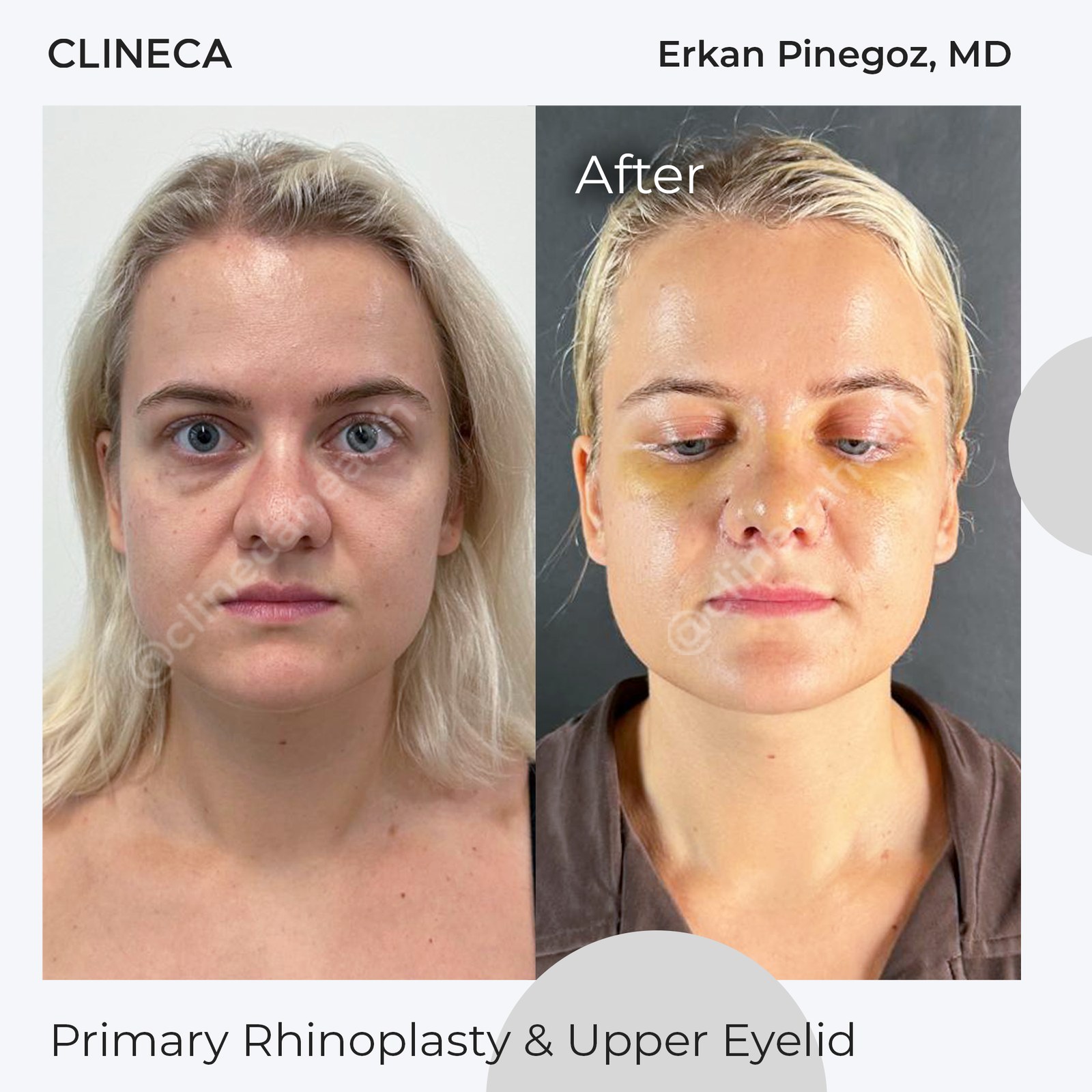
The best question is not whether combined surgery is possible. It is whether each added procedure solves a separate problem clearly enough to justify the extra recovery.
Frequently Asked Questions
References
- 📎American Society of Plastic Surgeons: Cosmetic Procedures
- 📎NHS: Cosmetic procedures
- 📎EBOPRAS
- 📎PubMed search: brow lift blepharoplasty outcomes
Related Articles

You Might Also Like

Related articles

Our specialists
 Clineca SpecialistErkan PinegözPlastic & Reconstructive Surgery
 Clineca SpecialistHakan AktaşPlastic & Reconstructive Surgery
 Clineca SpecialistOrkun UzuneyüpoğluPlastic & Reconstructive Surgery
 Clineca SpecialistSalim İskenderPlastic & Reconstructive Surgery
 Clineca SpecialistEngin SelamioğluPlastic & Reconstructive Surgery
 Clineca SpecialistCem AydınPlastic & Reconstructive Surgery
 Clineca SpecialistAlperen ÖnalEar, Nose & Throat (ENT)