

Have a question about Breast Reduction?
In this article
- Does breast reduction really help back and neck pain?
- How do you know if your pain is likely to be breast-related?
- What does the evidence say about pain relief after breast reduction?
- Who is a good candidate, and when might surgery not be the best answer?
- What are the trade-offs, risks, and scars?
- What is recovery like if the goal is pain relief?
- What should international patients know about travel, safety, and planning?
Heavy breasts can affect more than clothing fit or posture photos. For many people, the real question is practical: can breast reduction help with back and neck pain, and if so, when is surgery likely to make a meaningful difference?
Does breast reduction really help back and neck pain?
In many patients, yes. Breast reduction is not a cure for every kind of back or neck pain, but it can reduce pain that is linked to the weight and pull of large breasts. That usually means pain in the neck, upper back, shoulders, and the grooves caused by bra straps, often along with skin irritation under the breasts and limits on exercise.
According to the American Society of Plastic Surgeons (ASPS), breast reduction is commonly performed to relieve physical symptoms caused by overly large breasts, including back, neck, and shoulder discomfort. BAAPS and the NHS also describe breast reduction as an operation that may be considered when large breasts are causing physical problems and affecting daily life.
A 2024 study in Eplasty described reduction mammaplasty as a procedure performed not only for appearance, but also for quality-of-life improvement, with the aim of reducing chronic neck, back, and shoulder pain. That matters because the usual patient concern is not whether the breast shape changes, but whether daily strain becomes easier to live with.
The important limit is this: if your pain mainly comes from a spine condition, nerve problem, inflammatory arthritis, or a work-related posture issue, breast reduction may help only partly, or not as much as you hope. The best candidates are people whose symptoms clearly fit the pattern of weight-related breast strain rather than pain from a separate condition.
📋 Short answer Breast reduction often helps neck, shoulder, and upper-back pain when breast weight is a major cause, but it does not treat every source of musculoskeletal pain.
How do you know if your pain is likely to be breast-related?
The pattern of symptoms usually tells the story better than a single pain score. People with breast-related strain often say the pain gets worse as the day goes on, improves when they support the breasts with their hands, feels worse during exercise, and comes with shoulder grooving from bra straps or recurrent rashes in the crease underneath the breast.
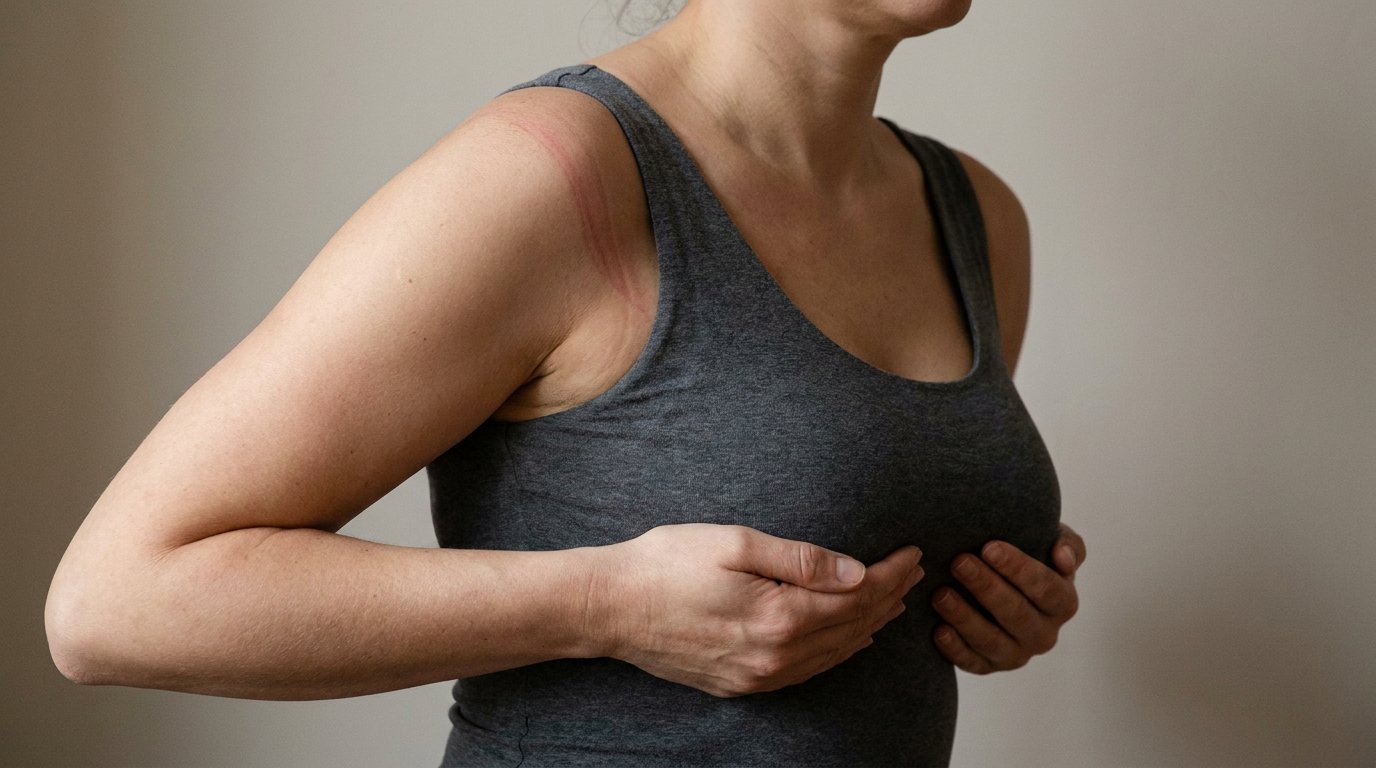
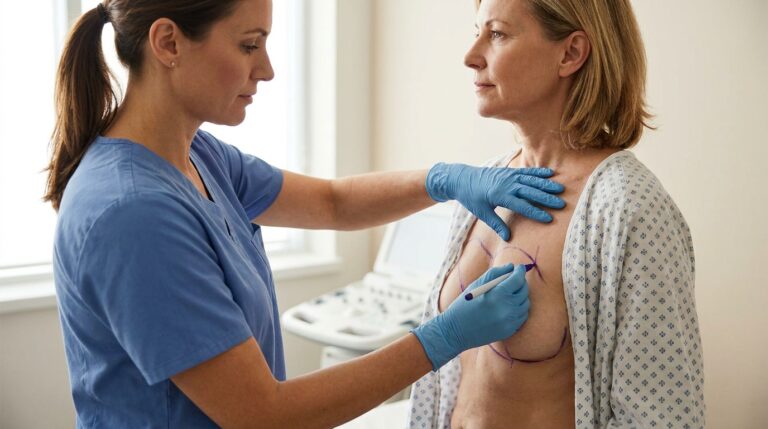
If the pain is lower in the back than the bra line, shoots down an arm, causes numbness, wakes you with tingling, or is linked to a previous injury, your surgeon may suggest that another cause should be assessed as well. That does not rule out surgery, but it does change the conversation. A good assessment looks at the whole picture rather than assuming breast size is the only reason you hurt.
You may be asked about past treatment too. Supportive bras, physiotherapy, weight changes, pain medicine, or exercise modification can all be relevant. Not because surgery is a last resort in every case, but because it helps show whether symptoms truly match breast burden and whether your expectations are realistic after surgery.
- ✓Neck, shoulder, and upper-back ache that worsens with breast weight
- ✓Deep bra-strap grooves or shoulder pressure marks
- ✓Skin irritation or sweating under the breast fold
- ✓Difficulty exercising, running, or sleeping comfortably because of breast size
What does the evidence say about pain relief after breast reduction?
The evidence is stronger than many patients realise. Breast reduction has been studied for symptom relief and quality of life, not only for cosmetic satisfaction. Across published studies, patients commonly report improvement in pain, physical function, and comfort in clothing and exercise after surgery.
That said, the medical literature is better at showing overall improvement than guaranteeing a specific degree of pain relief for one person. A 2001 study in Scandinavian Journal of Plastic and Reconstructive Surgery and Hand Surgery found high levels of postoperative satisfaction after reduction mammaplasty, which supports the idea that many patients feel the operation addressed the problems that led them to seek treatment. More recent breast reduction research indexed on PubMed also consistently links surgery with symptom improvement and better daily function.
This is where expectations matter. Surgery can remove weight, reduce pull on the neck and shoulders, and make movement easier. It cannot strengthen weak back muscles for you, reverse arthritis, or correct every postural habit developed over years. Some people still benefit from physiotherapy, core work, or treatment for a separate spine issue after they recover.
A realistic way to think about results
A useful question is not “Will all my pain vanish?” but “Is breast weight a major driver of my symptoms?” If the answer is yes, reduction often helps meaningfully. If breast weight is only one part of a bigger pain picture, the improvement may be real but incomplete.
Who is a good candidate, and when might surgery not be the best answer?
A good candidate is not defined by cup size alone. Surgeons look at symptoms, body proportions, skin quality, overall health, smoking status, weight stability, and whether you understand the trade-offs. If large breasts are causing daily discomfort, movement limits, skin problems, or poor quality of life, the operation may be reasonable even when the goal is mainly physical relief rather than appearance.
Surgery may be delayed or reconsidered if you smoke, have uncontrolled medical conditions, have a high risk of poor wound healing, or plan major future weight loss. According to the 2024 Eplasty study, common risks include bleeding, infection, poor wound healing, seroma, fat necrosis, and problems affecting nipple blood supply. Those risks do not mean the operation is unsafe by default, but they do need an honest discussion.
Future pregnancy and breastfeeding are also part of the decision. Some people can still breastfeed after breast reduction, but it is not guaranteed. Nipple sensation can change as well, sometimes temporarily and sometimes permanently.
If your symptoms are mild, or your pain pattern does not fit breast weight well, a non-surgical route may make more sense first. That could include bra fitting, targeted physiotherapy, weight management if relevant, treatment of a spine issue, or pain assessment by another specialist.
Symptoms clearly match heavy-breast strain, health is stable, and you accept scars, recovery, and the possibility of partial rather than perfect pain relief.
Pain is likely driven by a spinal, nerve, or inflammatory condition, or health factors make wound-healing risk more important right now.
What are the trade-offs, risks, and scars?
Breast reduction can be life-changing for comfort, but it is still a real operation. Scars are permanent, even though they usually fade with time. The typical pattern is around the areola, vertically down the breast, and often in the crease underneath, though the exact technique depends on how much reduction is planned and your anatomy.
The NHS and ASPS both note standard surgical risks such as bleeding, infection, anaesthetic risks, delayed healing, asymmetry, altered nipple sensation, and prominent scarring. In larger reductions, there can also be a higher chance of wound-healing problems at the lower part of the breast where incisions meet.
Patients often ask whether the lighter feeling is immediate. In a simple sense, yes, many people feel the physical weight difference quickly. But that does not mean you feel “normal” right away. Swelling, tightness, bruising, fatigue, and limited arm movement are common early on. It takes time for the body to settle and for the final breast shape to appear.
⚠️ Important trade-off Pain relief may be worth it for many patients, but it comes with permanent scars and a recovery period that can temporarily limit work, exercise, lifting, and sleep comfort.
What is recovery like if the goal is pain relief?
Most people judge recovery in stages rather than one finish line. In the first days, you can expect soreness, swelling, tiredness, and a feeling of chest tightness. Light walking is usually encouraged early, but lifting, stretching overhead, and strenuous activity are limited.
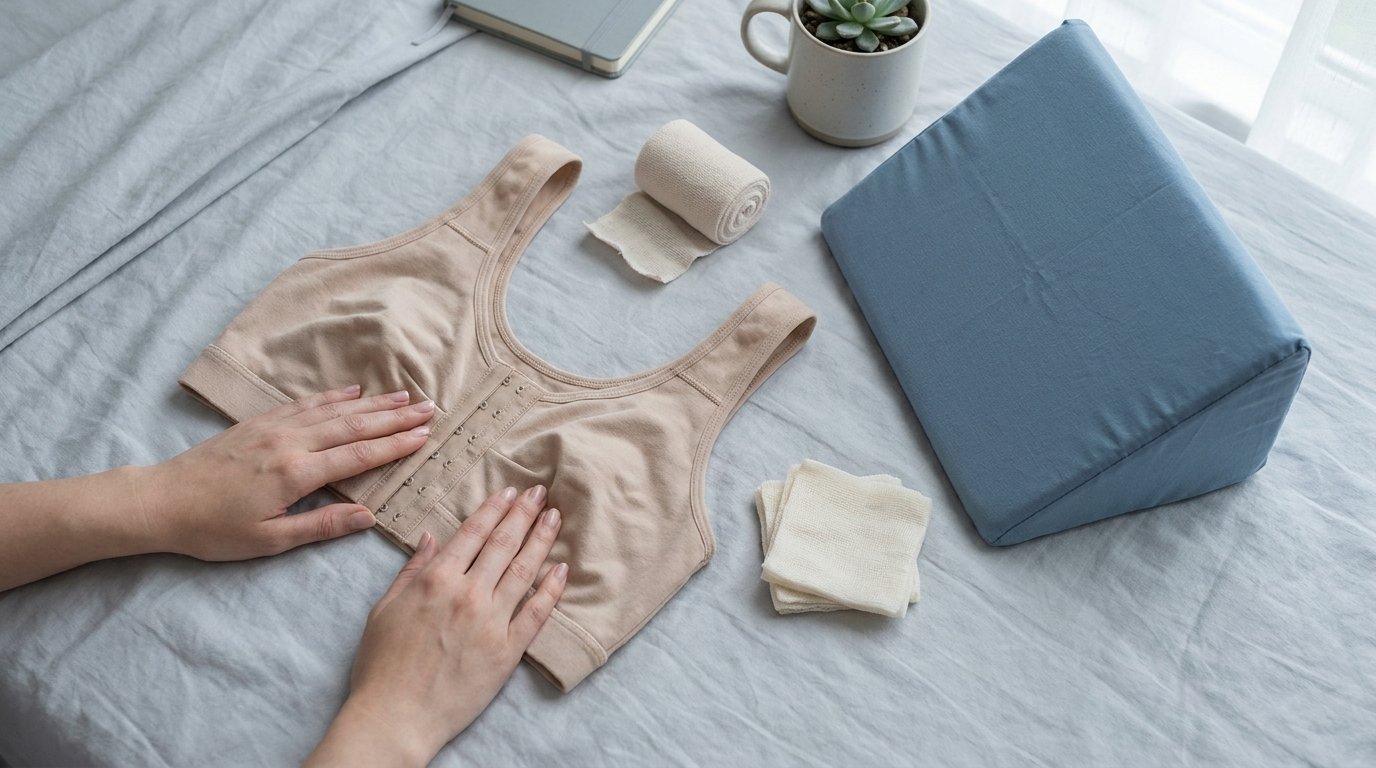
Many patients are comfortable doing basic indoor activity within the first part of recovery, but they are not ready for full exercise or heavy work. If your job is desk-based, you may be back sooner than someone whose work involves lifting, long standing, or repeated arm movement. Driving depends on comfort, range of motion, and whether you are still taking strong pain medicine.
Pain linked to breast weight can improve before swelling is fully gone, which is one reason patients sometimes notice relief fairly early. Even so, posture, muscle tension, and sleeping habits can take longer to settle. Some people benefit from gentle stretching and physiotherapy advice once their surgeon says it is safe.
Recovery stages patients often ask about
The early recovery period is about wound care and rest. The middle phase is when swelling gradually settles and daily comfort improves. The later phase is when scars mature, breast shape softens, and you get a clearer idea of how much symptom relief the operation has provided.
What should international patients know about travel, safety, and planning?
Travel adds another layer to recovery. Breast reduction is not just a same-day beauty treatment followed by sightseeing. You need enough time for pre-op review, the operation itself, early wound checks, and the period when swelling, drainage, dressings, or mobility limits are most relevant.
For travel safety, the main point is not the exact number of days but whether your surgeon is satisfied with your early healing and whether you can move around safely during the journey. After any operation, long periods of sitting can add to clot risk, so you may be advised to walk regularly, stay hydrated, and wear any recommended compression items if your surgical team advises them. The NHS guidance on cosmetic surgery abroad stresses the practical issue many patients underestimate: aftercare can become difficult once you fly home.
If you are considering treatment outside your home country, focus on surgeon credentials, where the operation takes place, how complications are handled, and who manages follow-up if you develop a wound issue after returning home. BAAPS and EBOPRAS place clear emphasis on training, standards, and informed consent. Those points matter more than polished marketing.
Cost should also be approached carefully. A quote for breast reduction may differ because of the surgeon’s experience, the hospital setting, anaesthesia, complexity of the reduction, overnight stay needs, garments, medicines, tests, and aftercare. Some quotes appear lower at first because they exclude parts of recovery support. A personalised price is normally confirmed after consultation and review of your medical history and photos.
This article is for informational purposes only and does not constitute medical advice. Always consult a qualified surgeon for personalised guidance.
🚨 Travel caution The biggest risk with cosmetic surgery abroad is often not the operation itself, but limited follow-up if a healing problem appears after you return home.
- ✓Ask who provides aftercare if you are already back home
- ✓Check whether the surgeon is on an official specialist register in their country
- ✓Confirm what the quote includes, especially hospital fees, garments, medicines, and follow-up
- ✓Allow enough time abroad for wound review rather than planning a rushed return flight
Frequently Asked Questions
References
- 📎Postoperative Complications Following Reduction Mammaplasty in Relation to Patient Body Mass Index — Eplasty, 2024
- 📎Patients’ satisfaction with breast reconstruction and reduction mammaplasty — Scandinavian Journal of Plastic and Reconstructive Surgery and Hand Surgery, 2001
- 📎American Society of Plastic Surgeons: Cosmetic Procedures
- 📎NHS: Cosmetic procedures
Related Articles



You Might Also Like



Related articles


Our specialists
 Clineca SpecialistErkan PinegözPlastic & Reconstructive Surgery
 Clineca SpecialistHakan AktaşPlastic & Reconstructive Surgery
 Clineca SpecialistOrkun UzuneyüpoğluPlastic & Reconstructive Surgery
 Clineca SpecialistSalim İskenderPlastic & Reconstructive Surgery
 Clineca SpecialistEngin SelamioğluPlastic & Reconstructive Surgery
 Clineca SpecialistCem AydınPlastic & Reconstructive Surgery
 Clineca SpecialistAlperen ÖnalEar, Nose & Throat (ENT)