
Have a question about bbl?
In this article
- What is the usual no-sitting timeline after a BBL?
- When can protected sitting and normal sitting usually start?
- Why does sitting matter so much after fat transfer?
- How do you manage daily life if you cannot sit normally?
- What problems can happen if you sit too early or for too long?
- How long should you stay in Turkey, and what affects the overall cost?
One of the first questions people ask after a Brazilian butt lift is how long do you have to avoid sitting after a BBL, because it affects everything from meals to travel home and going back to work. The short answer is that most surgeons advise avoiding direct sitting on the buttocks for about 2 to 6 weeks, but the real timeline depends on how your transfer was done, how you are healing, and the aftercare plan your own surgeon gives you.
What is the usual no-sitting timeline after a BBL?
For most patients, the strictest phase is the first 2 weeks, when surgeons commonly ask you to avoid direct pressure on the buttocks as much as possible. After that, some people are allowed to begin protected sitting for short periods, usually using a BBL pillow or by shifting weight onto the thighs rather than the newly treated area. Many patients are still told to limit this carefully until around 4 to 6 weeks.
That is the broad pattern, but it is not a rule that fits everyone. A BBL works by transferring your own fat into the buttocks, and part of early recovery is giving that fat the best chance to settle and develop a blood supply. The American Society of Plastic Surgeons (ASPS) and information indexed in PubMed on fat grafting and gluteal augmentation both support the idea that pressure, swelling control, and careful aftercare matter during healing.
What people often misunderstand is the phrase “avoid sitting.” It rarely means you must stand every minute of the day. It means avoiding normal, full-weight sitting directly on the buttocks, especially for long periods. In early recovery, your surgeon may allow you to sit briefly for the toilet, short meals, or necessary transfers, but not to relax into a chair for hours.
If your surgeon gives you a shorter or longer timeline than what you read online, follow the surgeon who examined you and performed the operation. Their plan is based on how much fat was transferred, where liposuction was done, how your skin and swelling look, and whether there were any concerns during surgery.
⚠️ Typical range, not a promise A common guide is no direct sitting for about 2 weeks, then limited protected sitting until roughly 4 to 6 weeks. Your own surgeon’s instructions come first.
When can protected sitting and normal sitting usually start?
A more useful way to think about recovery is in stages rather than a single date.
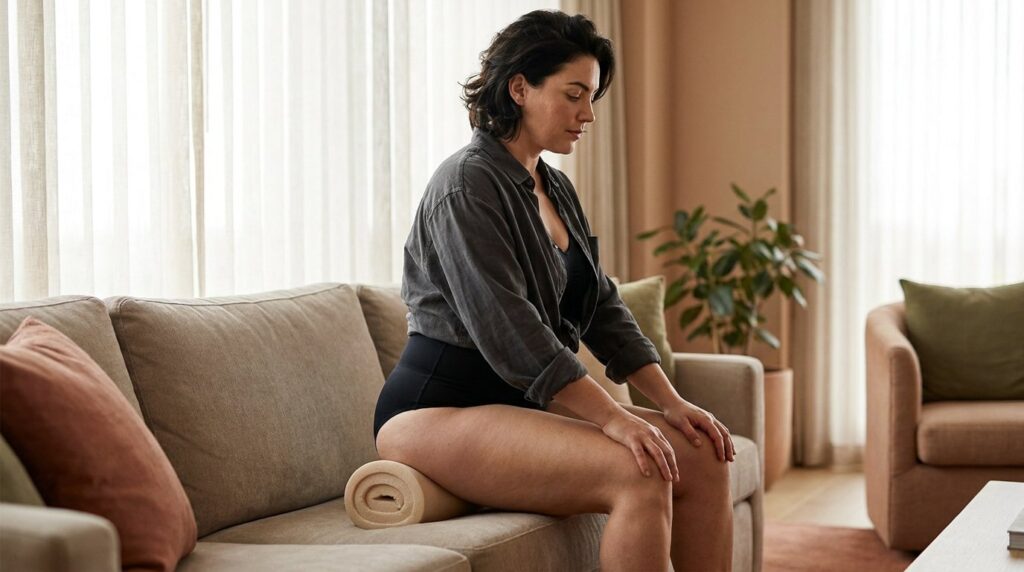
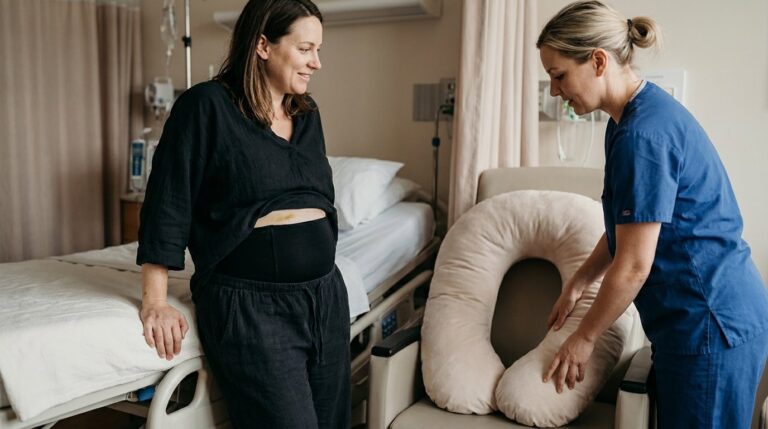
During the first 10 to 14 days, many surgeons want you to keep direct pressure off the buttocks almost all the time. If you must sit briefly, they may suggest a BBL pillow placed under the thighs, with the buttocks floating off the back edge, or they may prefer that you recline or lie on your side instead.
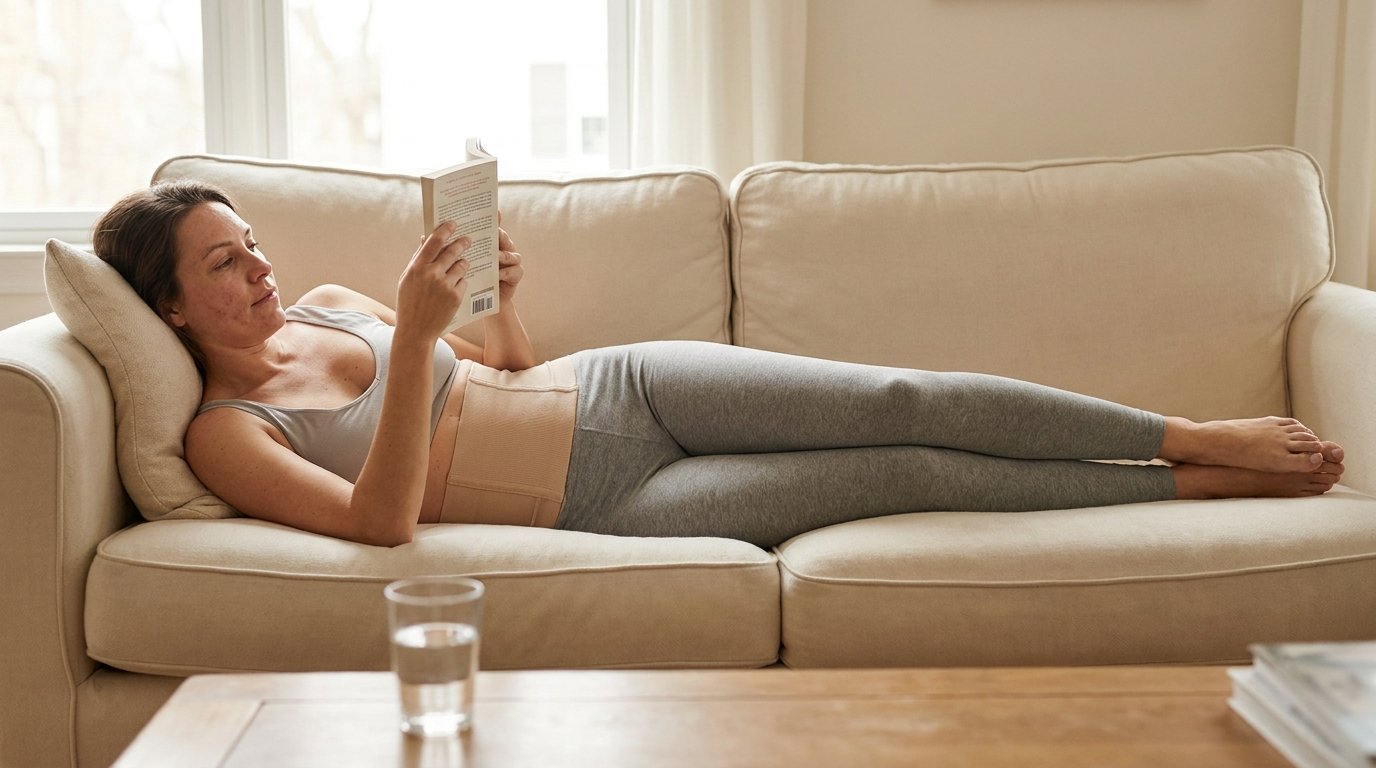
From about 2 to 4 weeks, some patients are allowed to reintroduce short, protected sitting. This usually means necessary sitting only, with a pillow or weight shifted forward, followed by standing up again. It is not the same as going back to long desk days, long car journeys, or dining out as normal.
By around 4 to 6 weeks, many patients are gradually moving toward more normal sitting, but often still with breaks, posture changes, and caution if there is swelling or tenderness. Some surgeons are comfortable with a slow return earlier than this; others are more conservative, especially after larger transfers or if healing is slower.
A practical way to judge progress is not comfort alone. Some people feel better before the tissues are fully settled. A chair may stop feeling painful before it stops being a source of pressure. That is why follow-up review matters.
A realistic recovery pattern
You may notice that the rules ease in layers. First, you avoid direct sitting. Next, you are allowed brief protected sitting. After that, you can often sit more normally for short periods, taking breaks to stand and walk. Only later does prolonged, casual sitting usually feel manageable.
This is also why returning to an office job can be awkward. Even if you feel well enough to work mentally, the physical act of sitting through meetings, commutes, and long laptop sessions may still not fit your aftercare plan.
Why does sitting matter so much after fat transfer?
A BBL is not simply about swelling going down. It is also about helping transferred fat survive. In the early period, those fat cells are fragile. They need time to establish a blood supply in their new location. Too much pressure is thought to work against that process, which is why surgeons are so specific about posture and positioning.
There is another reason sitting becomes a major issue: BBL recovery often involves two areas healing at once. The buttocks are recovering from fat transfer, while the donor areas, such as the abdomen, flanks, or back, are recovering from liposuction. So even when you try to sit differently, you may still feel sore, tight, or swollen elsewhere.
The NHS notes that cosmetic surgery recovery varies and depends on the operation and the person. That matters here because one patient’s easy-looking recovery on social media may not match another patient’s reality. Some people are mobile quickly but still cannot sit normally. Others tolerate protected sitting early but have more swelling and need to reduce activity again.
The safest approach is to treat pressure as part of the operation’s success, not as a minor comfort issue. That mindset makes the restrictions easier to follow.
📋 Comfort is not the same as readiness You may feel able to sit before your surgeon wants you to. Pressure can still matter even when pain is mild.
How do you manage daily life if you cannot sit normally?
This is the part many patients underestimate. The no-sitting period changes routine more than the operation itself for some people. Planning ahead makes a big difference.
Sleeping is usually easier on your stomach or side, depending on your surgeon’s advice and the liposuction areas. Eating may mean standing at a counter for a while or using a high surface where you do not need to settle back into a chair. Work can be manageable if it is remote and flexible, but much harder if it involves commuting, driving, or fixed desk time.

Travel needs special thought. If you are flying home after surgery, ask exactly how your surgeon wants you to position yourself on the journey, how often to stand up, and whether a BBL pillow is appropriate for you. A long transfer in a car can be just as awkward as a flight.
If you are still researching the operation itself, our page on Brazilian butt lift surgery explains the procedure in broader terms, but the sitting rules should still come from your operating surgeon’s aftercare plan.
A few practical adjustments tend to help most during the first weeks:
- ✓Set up a recovery area before surgery with pillows, chargers, water, medicines, and items you use often at standing height.
- ✓Arrange help for tasks that usually involve sitting or bending, especially in the first several days.
- ✓If you work at a computer, ask in advance whether you can do shorter sessions standing or with frequent breaks.
- ✓For necessary travel, build in extra time so you are not forced into long periods seated without moving.
What usually works best is accepting that life will be slower for a while. Patients who try to resume normal routines too early often find the restrictions more frustrating than the pain itself.
What problems can happen if you sit too early or for too long?
The concern is not that one brief, necessary sit will automatically ruin your result. The bigger issue is repeated or prolonged pressure during the phase when the transferred fat is still settling. That may affect the shape you keep, and it can also increase swelling or discomfort.
You should also pay attention to warning signs that go beyond simple soreness. According to the NHS, urgent medical advice is important after cosmetic surgery if you develop symptoms such as significant swelling, worsening pain, redness, discharge, or fever. With BBL specifically, any sudden shortness of breath, chest pain, severe dizziness, or feeling acutely unwell needs urgent medical attention.
The wider safety discussion matters too. BBL has specific risks and should only be performed by an appropriately qualified surgeon in a properly regulated setting. The risk profile is one reason aftercare instructions are strict. They are not optional extras.
If you are choosing where to have surgery, it is reasonable to ask who will handle your aftercare, how often you will be reviewed before you travel, and what happens if sitting remains painful or unclear by the time you are due to return home.
This is a common mistake once pain starts to improve. Feeling better does not always mean pressure restrictions are over.
If you need to return to work, drive, or fly, ask your surgeon how to adapt those activities rather than guessing.
How long should you stay in Turkey, and what affects the overall cost?
For international patients, the practical question is not only when you can sit, but whether your stay is long enough for early reviews and safe travel planning. Many people need to remain in Turkey long enough for the first recovery checks, dressing care, and a clear discussion about positioning for the flight home. The exact stay depends on the surgical plan and the surgeon’s protocol.
Cost is best understood as a package of decisions rather than a single advertised figure. A personalised quote is normally confirmed after consultation and depends on factors such as the surgeon’s experience, the hospital or clinic setting, the complexity of liposuction and fat transfer, anaesthesia, compression garments, medications, follow-up care, and whether airport transfers or hotel arrangements are included.
Because aftercare is especially important with BBL, it is worth checking what the quote actually covers. Some packages include only the operation itself, while others include recovery support, post-op checks, and logistics that matter a great deal during the no-sitting phase. If you want to discuss timing or travel planning, you can request a personalised assessment through the online consultation page.
Frequently Asked Questions
References
- 📎PubMed search: gluteal fat grafting postoperative sitting
- 📎PubMed search: Brazilian butt lift safety fat grafting
- 📎NHS cosmetic procedures
- 📎ASPS cosmetic procedures
Related Articles
You Might Also Like
Related articles
Our specialists
 Clineca SpecialistErkan PinegözPlastic & Reconstructive Surgery
 Clineca SpecialistHakan AktaşPlastic & Reconstructive Surgery
 Clineca SpecialistOrkun UzuneyüpoğluPlastic & Reconstructive Surgery
 Clineca SpecialistSalim İskenderPlastic & Reconstructive Surgery
 Clineca SpecialistEngin SelamioğluPlastic & Reconstructive Surgery
 Clineca SpecialistCem AydınPlastic & Reconstructive Surgery
 Clineca SpecialistAlperen ÖnalEar, Nose & Throat (ENT)